
Last updated November 15, 2026
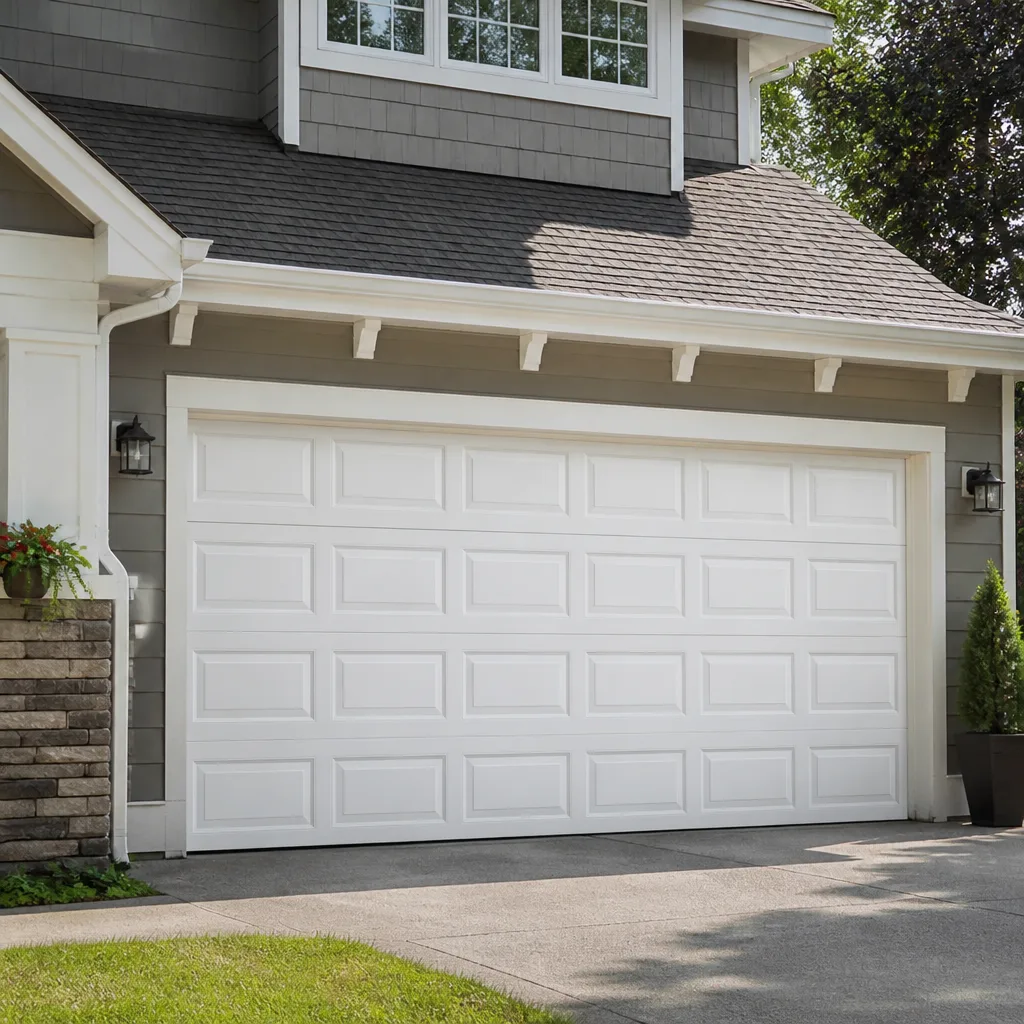 Raised-panel steel
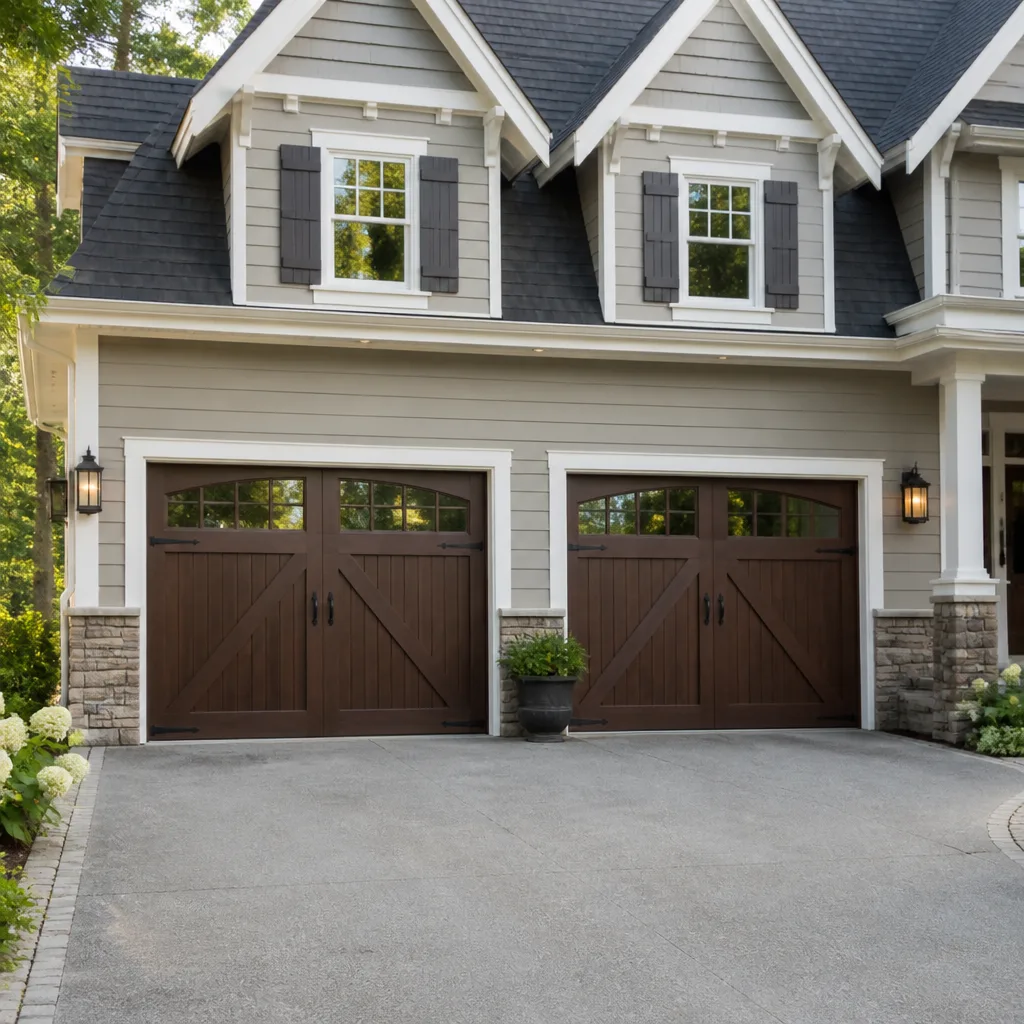 Carriage house
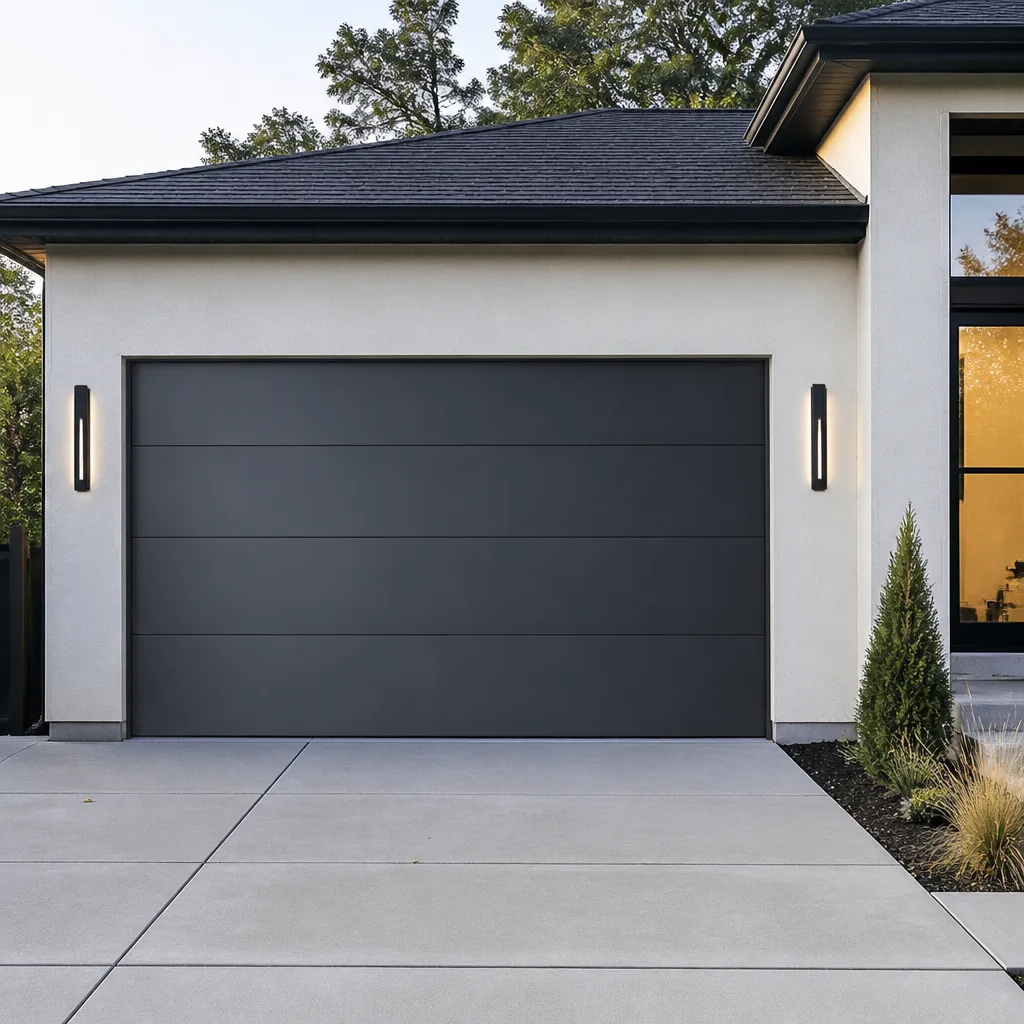 Modern flush
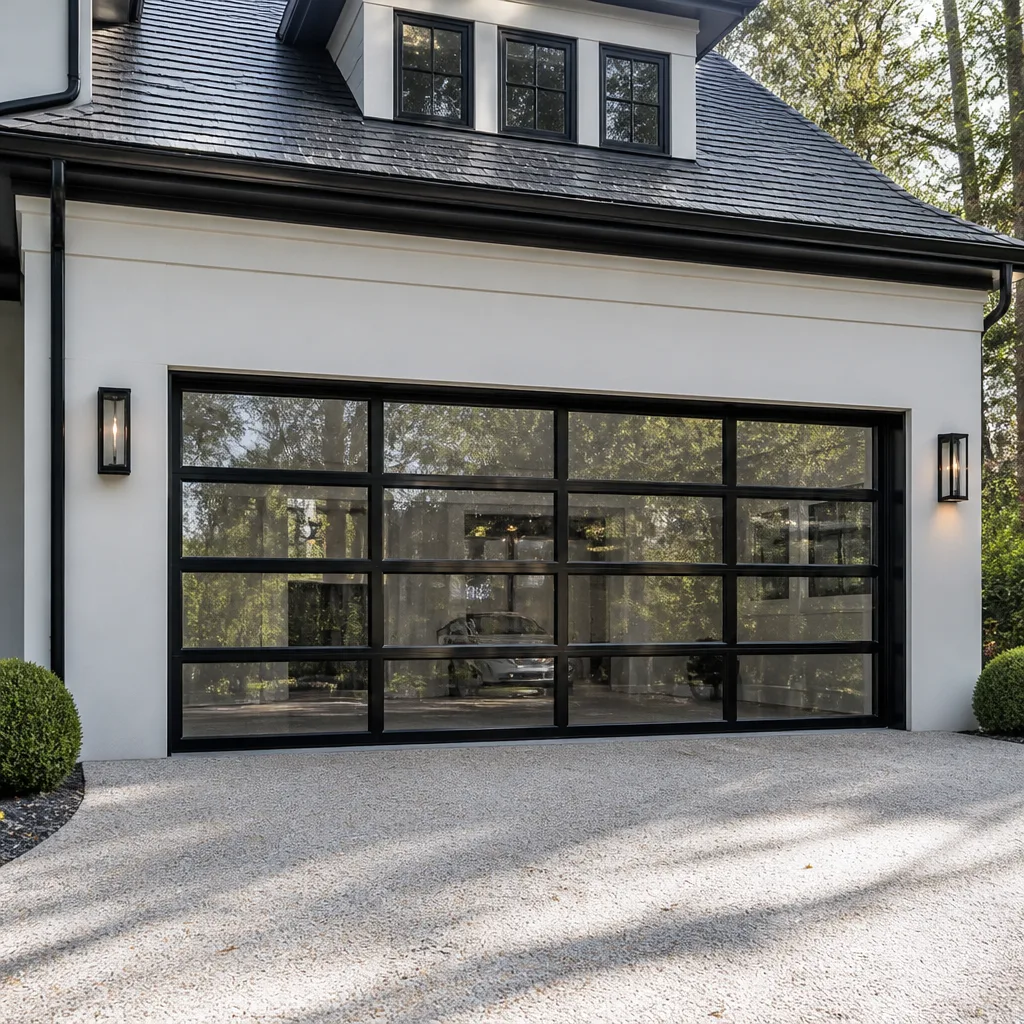 Full-view glass
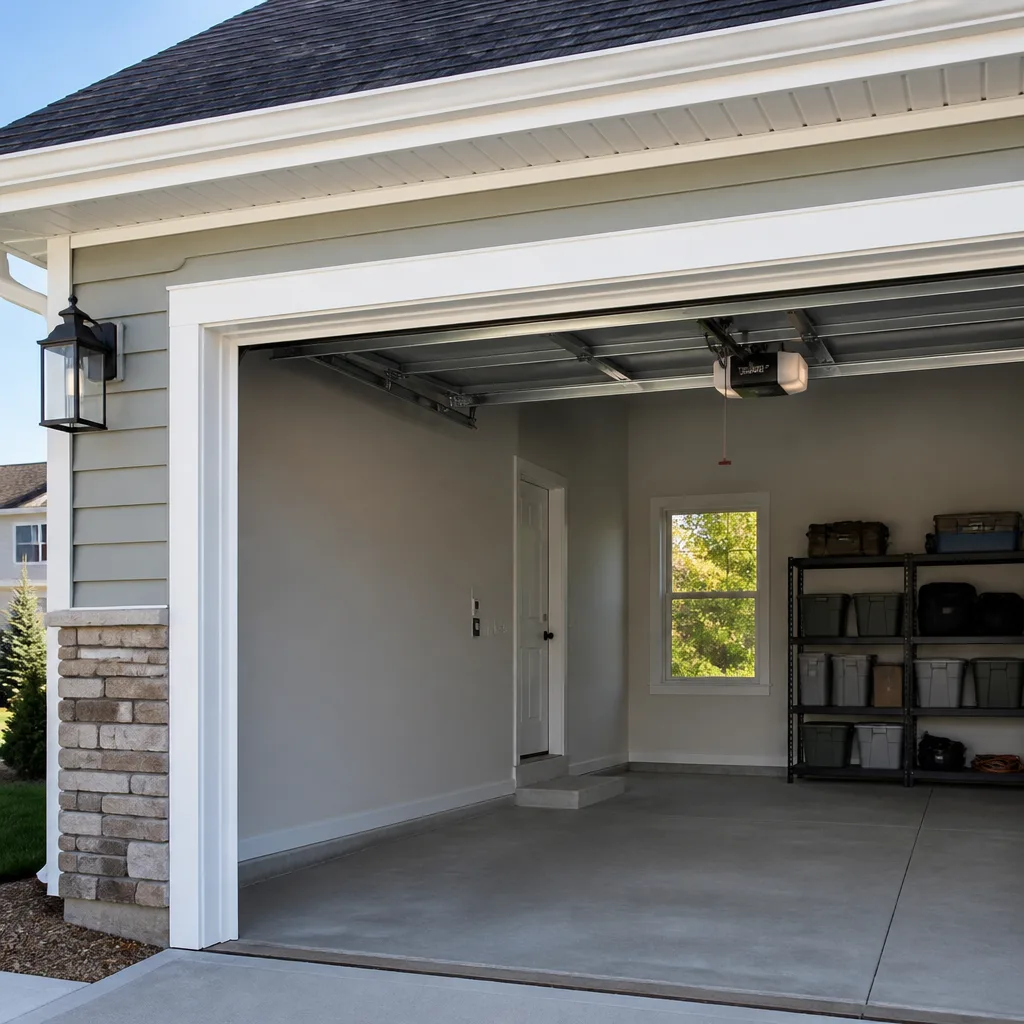 LiftMaster openers
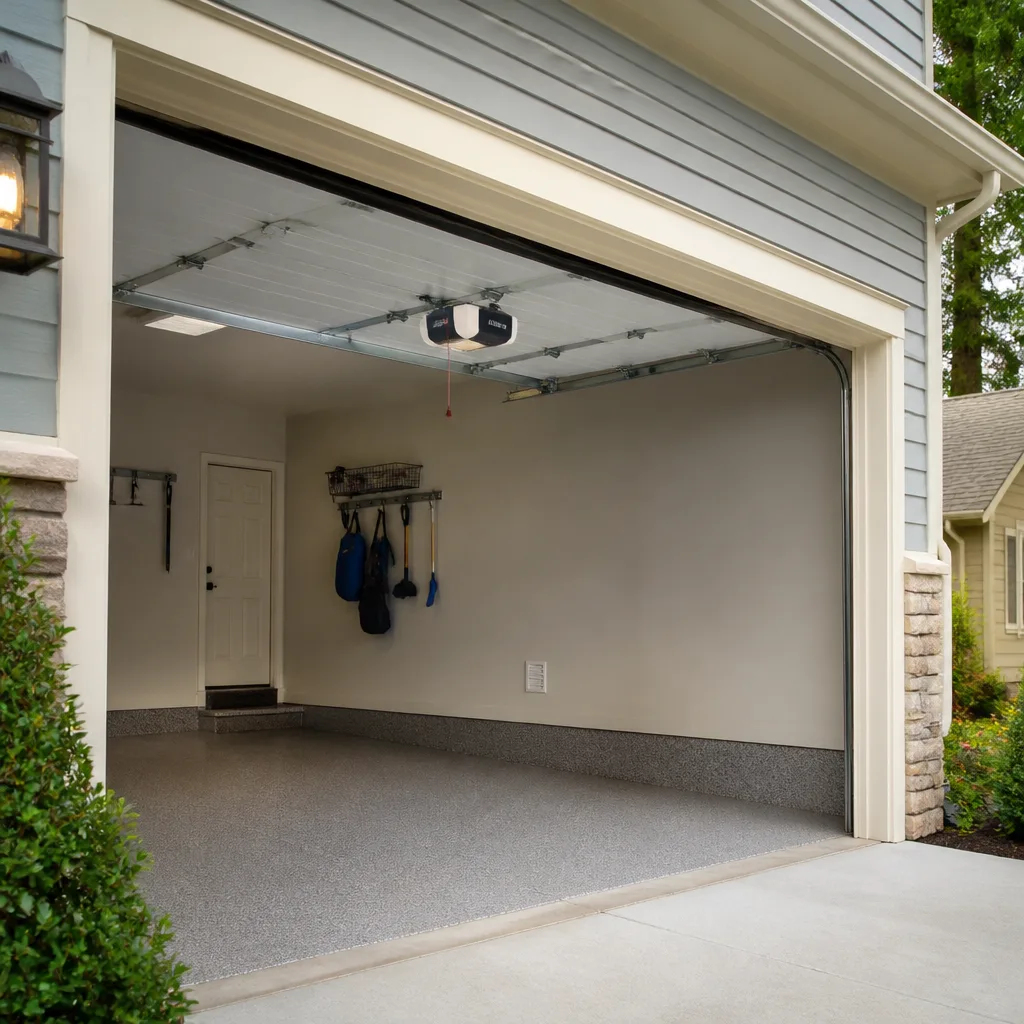 Chamberlain openers
Full 25-point door and opener safety check with every visit - springs, cables, rollers, tracks, and your LiftMaster or Chamberlain opener included
You get a price before we start. It does not change when the pro arrives.
Get your free estimateThe Complete Guide to Garage Doors in San Mateo
Most San Mateo homes were built before the modern garage door industry settled on its rough opening dimensions. That single fact explains a lot of the confusion homeowners run into here. A “standard” replacement door that fits a newer Sacramento tract home often won’t drop cleanly into a 1950s Baywood bungalow without a custom header, and the opener that came with the house may predate every safety standard written since. We wrote this guide to close that gap. By the end you’ll understand the material choices that hold up in San Mateo’s damp, mild climate, the sizing quirks baked into pre-1980 garages, what the neighborhood HOAs typically restrict, and how to tell repair from replacement without a sales pitch.
Quick Answer
Garage doors in San Mateo need to be matched to the house, not to a national catalog. The two biggest variables are the age of the rough opening (many pre-1980 homes have non-standard widths, low headroom, or masonry surrounds) and the material choice for a damp but mild climate, where steel and aluminum generally outperform wood and fiberglass on longevity and maintenance. Brand fluency matters too, since the opener already on your ceiling is often a model local dealers no longer stock.
Styles & brands we work with
- Raised-panel steel
- Carriage house
- Modern flush
- Full-view glass
- LiftMaster openers
- Chamberlain openers
Table of Contents
- How does San Mateo’s climate change the material choice?
- What’s unusual about garage door openings in pre-1980 San Mateo homes?
- What do San Mateo HOAs typically restrict in Baywood, Beresford, and Sugarloaf?
- Which opener drive type works best in San Mateo?
- Why multi-brand expertise matters when your hardware doesn’t match the shelf
- Repair or replace: how to actually decide
- What does garage door work cost in San Mateo?
- Common mistakes to avoid
How does San Mateo’s climate change the material choice?
The Peninsula doesn’t hand you a dramatic climate problem. It hands you a quiet one. Winters are mild, but the air stays cool and damp for long stretches, and that combination punishes certain materials slowly and invisibly. Wood panels absorb that moisture at the edges and the joints, then swell and split. Fiberglass can survive the damp, but it chalks and fades under steady UV, and a faded fiberglass door is hard to refinish without looking patchy. The material that tolerates San Mateo’s conditions best is usually steel, with aluminum close behind.
Here’s how the four common panel materials sort out for a San Mateo garage:
- Steel: the default for good reason. Steel panels resist moisture, hold their paint, and come in the widest range of styles. A coated or galvanized finish is worth the upgrade. This is what most San Mateo homeowners end up choosing.
- Aluminum: lighter than steel and naturally corrosion-resistant, which suits the damp. It dents more easily, so it’s a better fit for garages that see careful use than for family traffic.
- Wood: unmatched curb appeal on the right Craftsman or Spanish-style home, but it needs real maintenance in this climate. Plan on refinishing on a steady schedule or the damp will find every end grain. Wood doors are also among the heaviest, which puts more strain on the opener and springs.
- Fiberglass: light, affordable, and immune to rot. The tradeoff is UV fading and a shell that can crack under impact. Fine for a low-traffic door, less ideal for the front of the house.
If you’re weighing a new door against keeping what you have, our garage door repair service starts with an honest look at your current door’s material condition before anyone talks about replacement.
What’s unusual about garage door openings in pre-1980 San Mateo homes?
A lot, and it’s the single most common reason a straightforward install turns into a custom job. Much of San Mateo’s housing stock predates the industry’s drive toward standardized openings, so “standard size” often doesn’t apply. When a technician measures, three things come up again and again here:
- Non-standard widths. A door in the 1950s stock may be slightly wide or narrow compared to modern sizing, which means a replacement has to be built to the opening rather than dropped in from a catalog. Custom sizing isn’t rare in San Mateo; it’s routine.
- Low headroom clearance. Older garages were built tight to the ceiling, and a modern door with standard track uses more overhead clearance than the framing allows. Low-headroom track and a different torsion setup solve this, but only if the person measuring knows to check the ceiling, not just the opening.
- Masonry surrounds. Many Peninsula garages have brick or stone framing around the opening. You can’t just shim a new door into masonry the way you would into wood framing, and any fastening has to be planned around it.
This is why a written measurement matters more in San Mateo than in newer markets. A free estimate should include a real measurement of the opening, the headroom, and the surrounding framing before anyone quotes a price. If a quote is given over the phone without those numbers, it isn’t a quote. It’s a guess, and it becomes your problem when the door arrives.
What do San Mateo HOAs typically restrict in Baywood, Beresford, and Sugarloaf?
San Mateo’s older neighborhoods carry active HOA guidelines, and they tend to focus on appearance consistency rather than engineering. Common restrictions in Baywood, Beresford, and Sugarloaf include:
- Color palettes. Many HOAs maintain an approved list of door colors to keep the streetscape uniform. A door you love in a showroom may not be permitted.
- Panel style. Carriage-house styles, raised panels, or window configurations can be restricted to match the neighborhood’s character.
- Visible materials. Some associations specify or restrict materials on street-facing doors, which can rule out an otherwise sound choice.
- Window and glazing rules. Frosted versus clear, and how much window a door can have, sometimes come up.
The practical move is to get the HOA’s current guidelines in writing before you pick a door, not after. We’ve seen the approval process derail a purchase more than once because the door was ordered first and approved second. If you’re not sure who governs your street, ask before you shop. It costs nothing and saves a lot. When you’re ready to move, our Quarry Garage Door Repair team can walk through material and style options that fit your guidelines.
Which opener drive type works best in San Mateo?
San Mateo’s mild, damp air doesn’t demand any special opener, but the climate does favor quieter, better-sealed units, and the house style usually points to one drive type over another. The four drive types behave differently:
- Belt drive: the quietest option, with a steel-reinforced rubber belt instead of a chain. Best for garages under a bedroom or where noise carries. The belt is the part to watch in damp conditions, since it can stiffen over time, but modern belts hold up well here.
- Chain drive: durable, affordable, and the most common. It’s louder, which matters in denser San Mateo lots where the garage shares a wall with living space.
- Screw drive: a threaded rod setup that’s strong and quiet, though it needs periodic lubrication to stay smooth in a damp garage. A solid middle option.
- Direct drive: a motor that travels along the rail itself, with fewer moving parts. Quieter than chain and increasingly capable, though it works best on a well-balanced door.
The opener’s condition matters as much as the type. If yours is a Wi-Fi-enabled garage door opener repair candidate, we diagnose the actual fault rather than swapping parts. Smart-home connectivity, safety-sensor alignment, and travel limits all get looked at together. Most opener problems in San Mateo trace back to sensors knocked out of alignment or a control board, not to the motor being worn out.
Why multi-brand expertise matters when your hardware doesn’t match the shelf
Here’s a problem that doesn’t show up in national guides: the brand already bolted to your ceiling or hanging on your frame may not be the brand a local dealer currently stocks. Opener lines get discontinued, panel styles retire, and a door installed in 1998 can be on its third generation of parts by now. If the person you call only works on what they sell, the answer is always “replace it,” whether that’s true or not.
We work on the brand you already have. Our technicians have up to 11 years of experience across eight major manufacturers: LiftMaster, Chamberlain, Genie, Clopay, Amarr, Wayne Dalton, Craftsman, and Raynor. That covers both modern smart systems and legacy units, including the Craftsman openers in a huge share of older San Mateo garages. In practice, multi-brand fluency means we can match a panel from Amarr to an existing door, diagnose a Genie logic board without guessing, and tell you honestly whether that Wayne Dalton door has another decade in it or needs replacing. Garage doors are what we do, exclusively, which is why the diagnosis lands on the first visit instead of the third.
If you live in the surrounding Peninsula, our San Mateo service covers the neighborhoods where these older, non-standard installations cluster.
Repair or replace: how to actually decide
The honest answer depends on the door’s structure, not its age. A well-built steel door can be worth repairing well into its second decade; a wooden door that’s absorbing moisture may not be worth the next round of repairs. Run through these questions:
- Are the panels intact? A few dents or a bent bottom section can usually be replaced. A door with rot or rust spreading through multiple panels is a replacement candidate.
- Is it the springs or the door? Broken springs are a repair, and a common one. A door that’s sagging or out of square is a structural problem, and it may point to replacement.
- Does the opener need replacing too? If the door is sound but the opener is failing, a new opener is far cheaper than a new door. If both are worn, replacing them together usually makes more sense than fixing one and returning for the other later.
- Is the door safe? A door that won’t reverse on contact, or that drops rather than lowers, needs attention now. Modern openers have safety-reversing sensors as standard; older units may not.
We don’t push one outcome to protect a sales quota. If repair is the right call, we say so. If your San Mateo garage, its non-standard opening, and the door’s condition all point to replacement, we’ll tell you that too, and explain why.
What does garage door work cost in San Mateo?
Costs here reflect the custom-sizing reality of an older housing stock. Where a newer market might get away with an off-the-shelf door, San Mateo often needs a measured build, and that changes the estimate. The ranges below are typical for the area; your written estimate is the final word. And to be clear up front: the price is quoted and agreed before any work starts, so there are no surprises on the invoice.
- Spring replacement: typically one spring at a time, and a matched pair is replaced together, so a pair runs roughly double a single. Ask for the pair price if both are worn.
- Opener repair: sensor alignment, control board, or travel-limit fixes are usually the lower end. Opener replacement lands higher.
- Panel or section replacement: per-panel pricing, higher when a custom or discontinued style has to be matched.
- Full door installation: the widest range, because non-standard widths, low headroom, and masonry surrounds can all add labor. Steel is generally at the lower end; wood and custom architectural styles at the top.
- Custom sizing: a real cost in San Mateo. It’s added when the opening isn’t a modern standard size.
The one thing we won’t do is quote a number over the phone for a door that needs measuring. Call (877) 373-8927 for a free estimate, and we’ll measure, explain the options, and give you a written price before anything is ordered.
Common Mistakes to Avoid
- Ordering a “standard” door before measuring. The most expensive mistake in San Mateo. Many pre-1980 openings aren’t standard width, and a custom build ordered after the fact costs more in time than in money. Measure the opening, the headroom, and the surrounding framing first.
- Buying before checking HOA rules. In Baywood, Beresford, Sugarloaf, and other San Mateo neighborhoods, color and style restrictions are common. Get the guidelines in writing before you fall in love with a door.
- Choosing wood for a damp garage without planning the upkeep. Wood is beautiful, but San Mateo’s cool, damp air punishes an unsealed door. If you want wood, budget for refinishing on a real schedule.
- Matching the opener to the salesman, not the door. A dealer who only sells one brand will steer you there. Match the opener to your door’s weight and your house’s layout, not to a shelf.
- Ignoring low headroom. A standard door in a garage built to older ceiling heights won’t clear. Low-headroom track solves it, but only if it’s identified during the estimate.
- Touching the springs yourself. Torsion and extension springs are under serious tension and can cause severe injury if they release. This is a job for a trained professional with the right tools, every time.
- Choosing the cheapest bid on a custom job. A quote that doesn’t include a measurement is a number, not a price. Compare written estimates that spell out the door, the opener, and any custom work.
See the difference
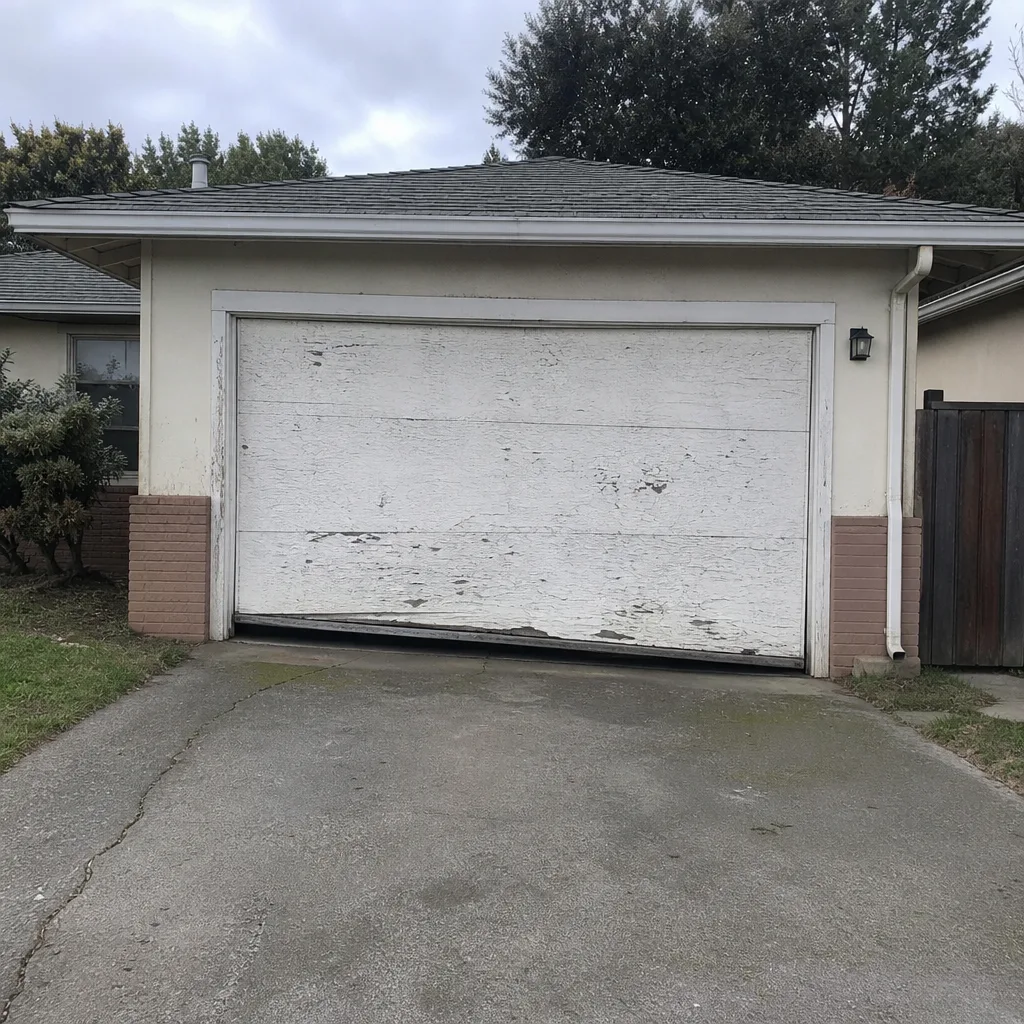 Before
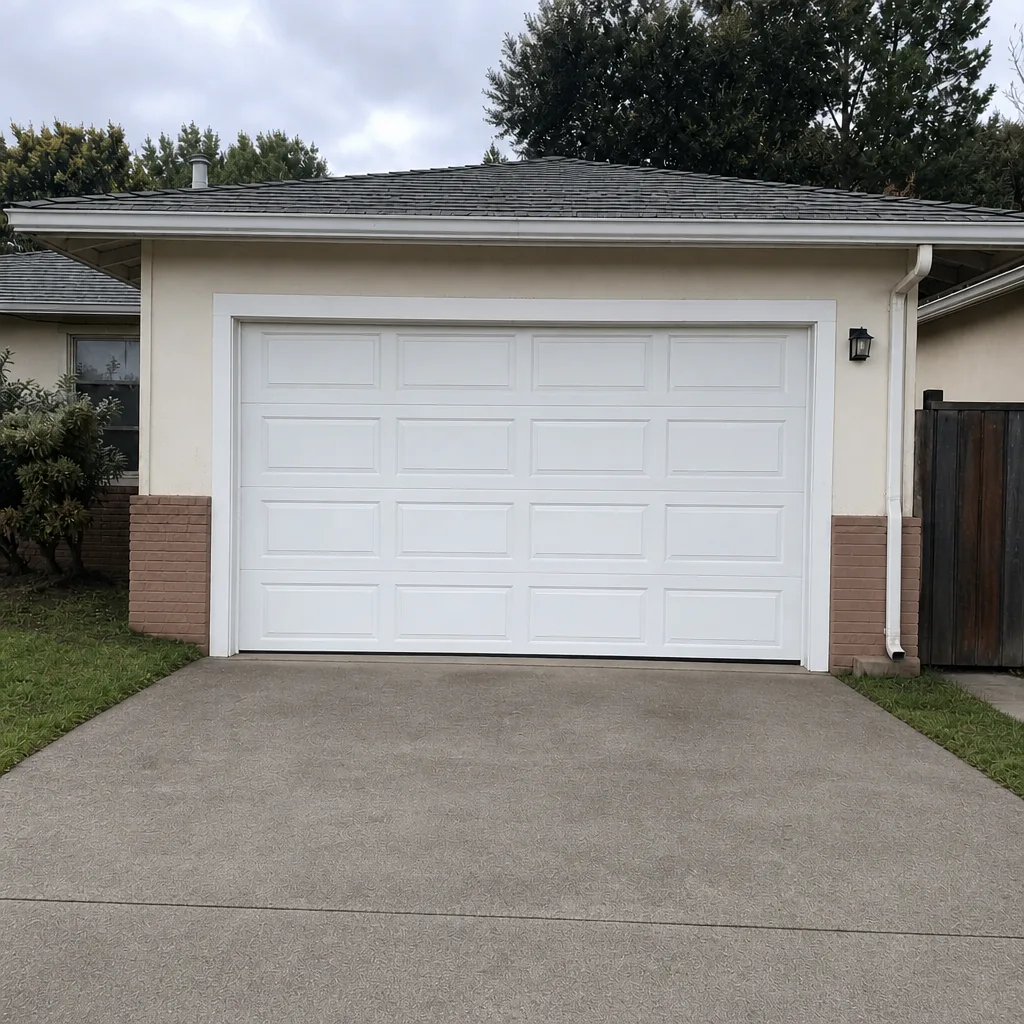 After
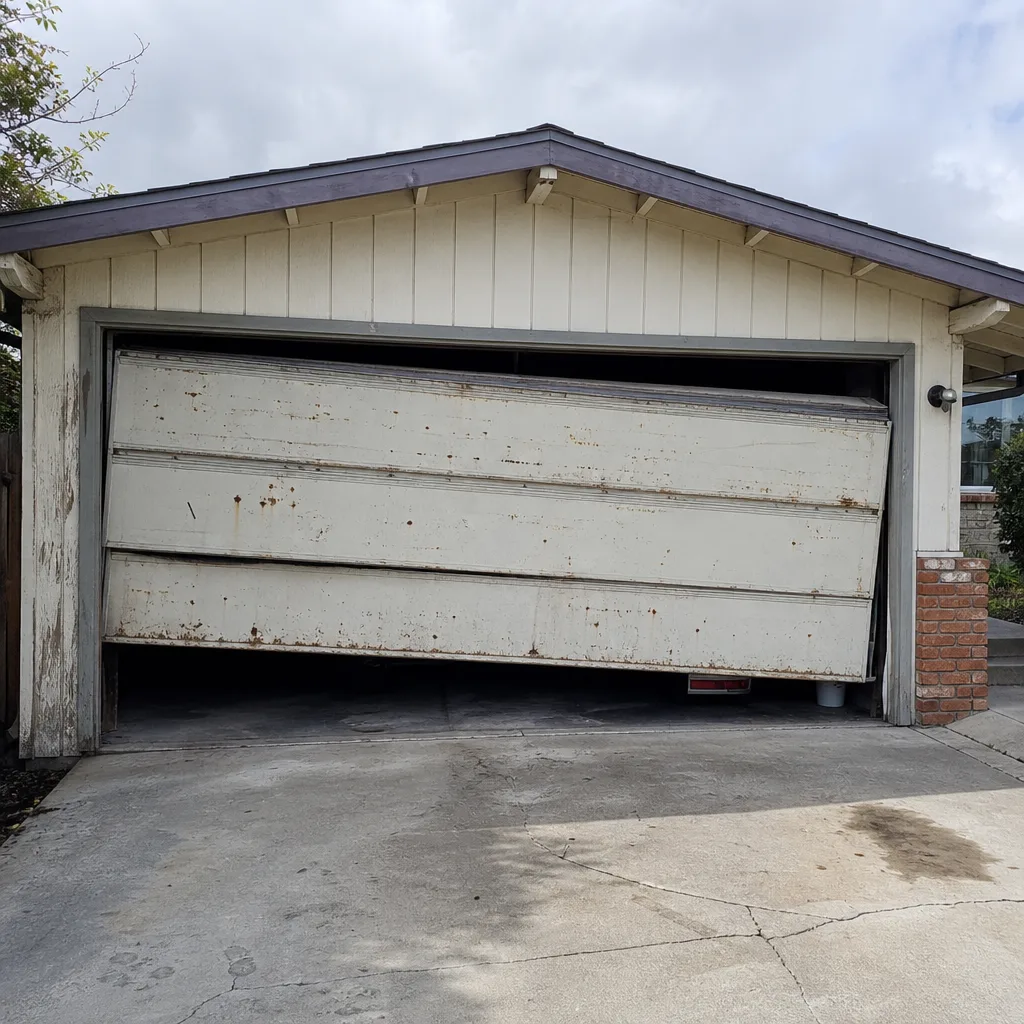 Before
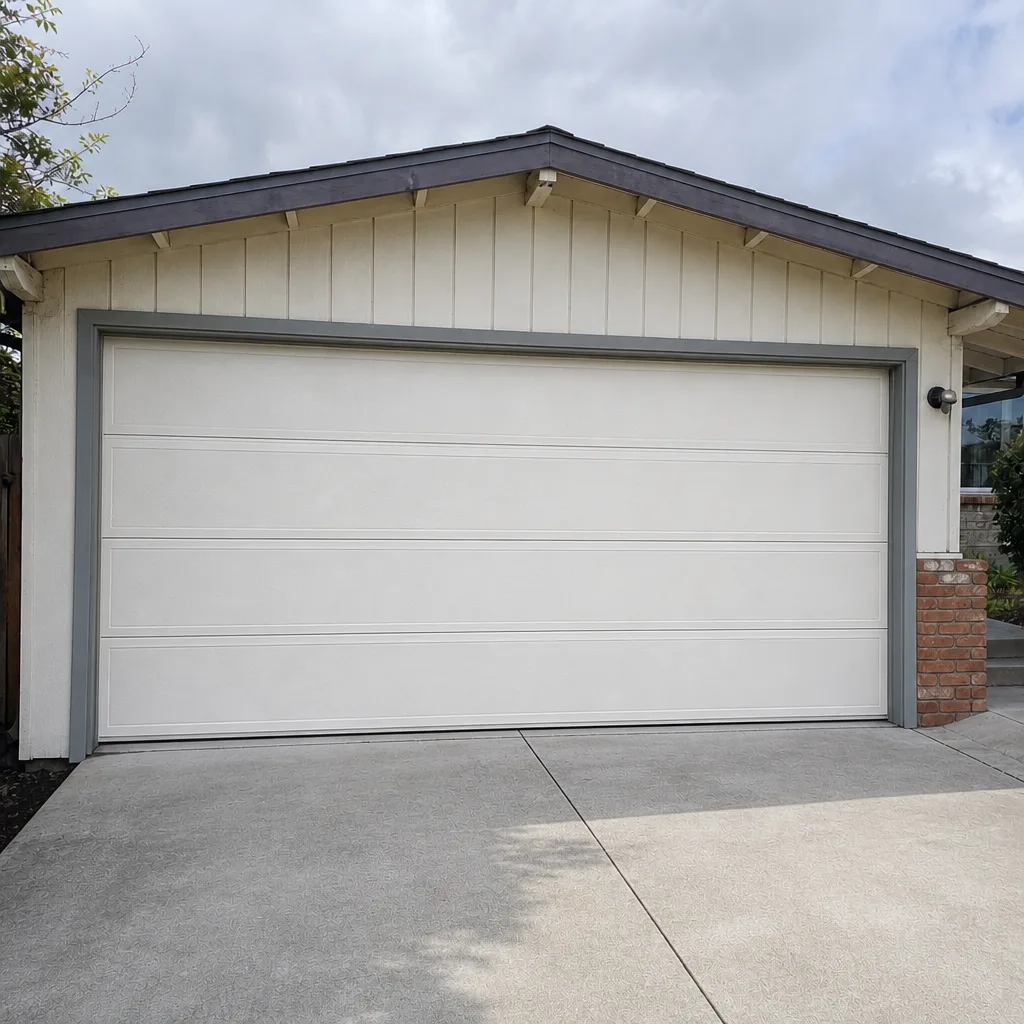 After
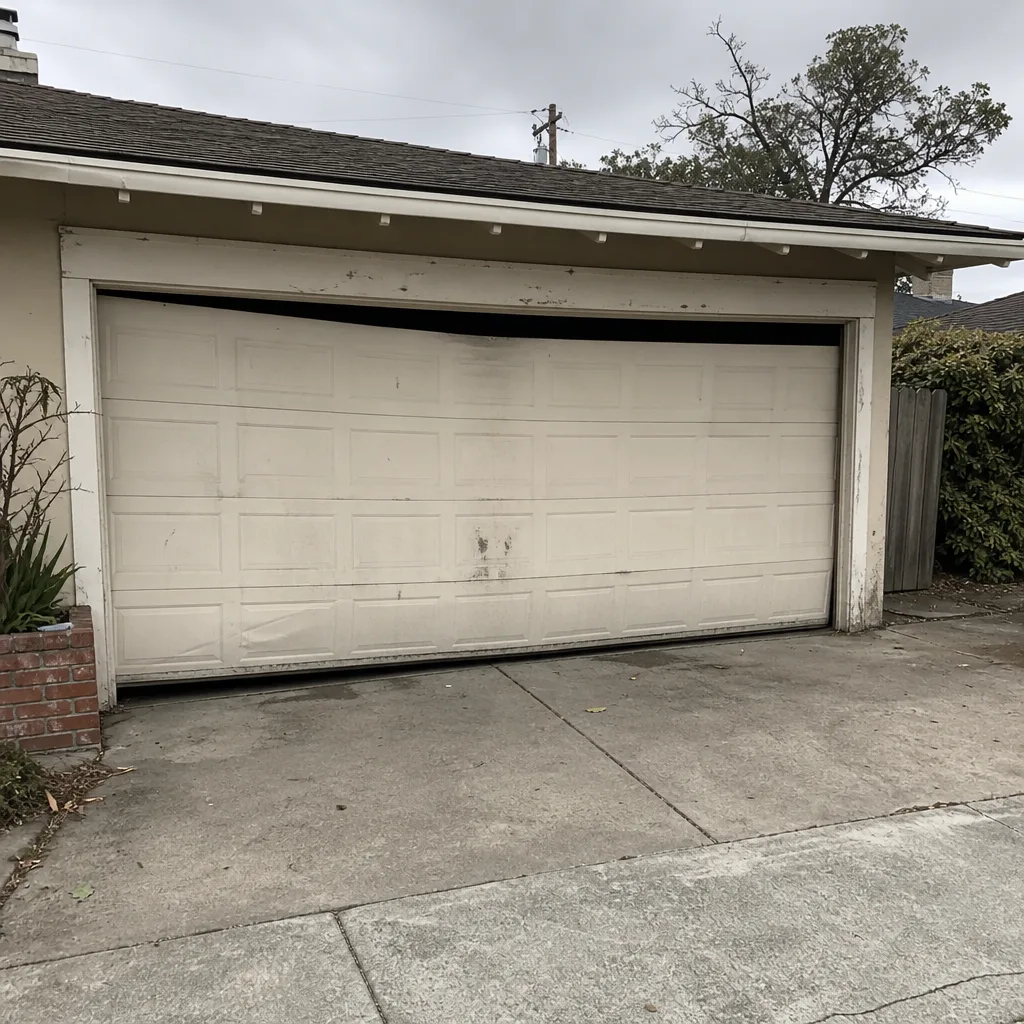 Before
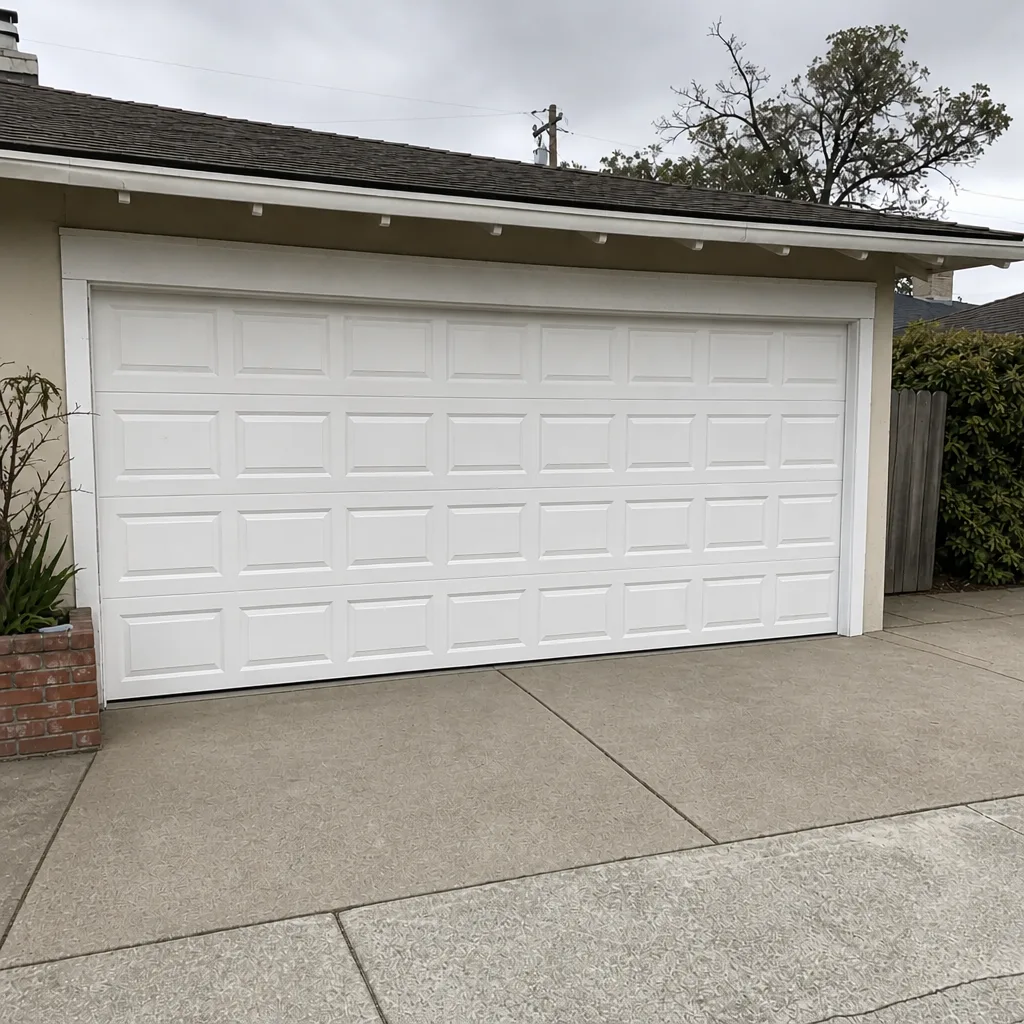 After
When to Call a Professional
Some things you can check yourself: whether the safety sensors are aligned, whether the remote battery is fresh, whether the door is balanced. Other things you shouldn’t touch. Call a professional when the door has a broken spring, when the cables are frayed or slack, when the door drops rather than lowers smoothly, when a panel is cracked or the track is bent, or when the opener won’t reverse on contact. Those are safety issues, and the spring and cable systems carry enough stored energy to hurt someone badly. On the planning side, call before you order a door, so the measurement and the estimate happen first. Quarry Garage Door Repair offers free estimates in San Mateo: call (877) 373-8927. We answer 24/7, with fast dispatch from 7am to 7pm, Sunday through Friday.
Frequently Asked Questions
Often no. Many pre-1980 San Mateo homes have non-standard opening widths, and a standard door may not fit without a custom header or build. Measure the opening, the headroom, and the framing before ordering. Call (877) 373-8927 for a free measurement.
Yes. The cool, damp air is hard on wood and fiberglass over time, and steel or aluminum generally hold up better. Steel is the most common choice here because it resists moisture and keeps its finish. Call us to talk through your specific garage.
Possibly. HOAs in Baywood, Beresford, Sugarloaf, and other San Mateo neighborhoods commonly restrict color, panel style, and visible materials. Get the current guidelines in writing before you order. We can help you match a compliant option: call (877) 373-8927.
Belt drive is the quietest and suits garages under living space; chain drive is durable and common; screw and direct drive sit in between. The right choice depends on your door’s weight and your garage layout. Call us for a recommendation.
Replace when rot, rust, or a sagging frame affects multiple panels, or when the door is out of square. Repair when the issue is springs, the opener, or a single damaged section. We’ll tell you honestly which makes sense: call (877) 373-8927 for a free estimate.
No. Garage door springs and cables are under high tension and can cause severe injury if they release. They need a trained professional with the right tools. Call (877) 373-8927 and we’ll handle it safely.
The Bottom Line
Garage doors in San Mateo come down to three things: measure before you buy, match the material to the damp climate, and work with someone who knows the brand already on your house. The pre-1980 housing stock means openings aren’t standard, so a custom build is often the realistic answer. Steel and aluminum beat wood and fiberglass for longevity here. HOA rules need checking before you order. And when it’s repair versus replace, the honest answer depends on the door’s structure, not a sales pitch. We work on the brand you already have, across eight major manufacturers, because garage doors are all we do.
Ready to get a real answer on your door? Call (877) 373-8927 for a free estimate. We answer 24/7, with fast dispatch from 7am to 7pm, Sunday through Friday, and the price is agreed before any work starts.
Written by the team at Quarry Garage Door Repair.