
Last updated November 15, 2026
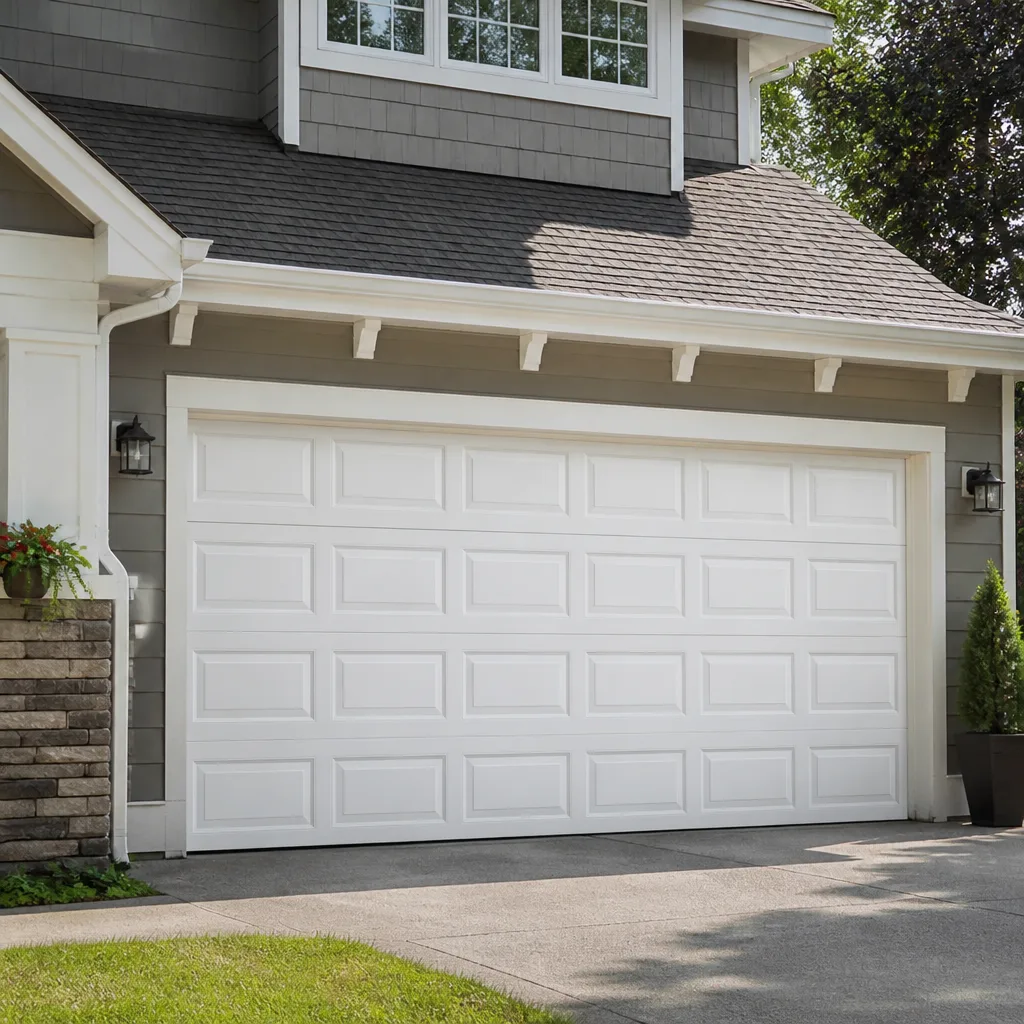 Raised-panel steel
 Carriage house
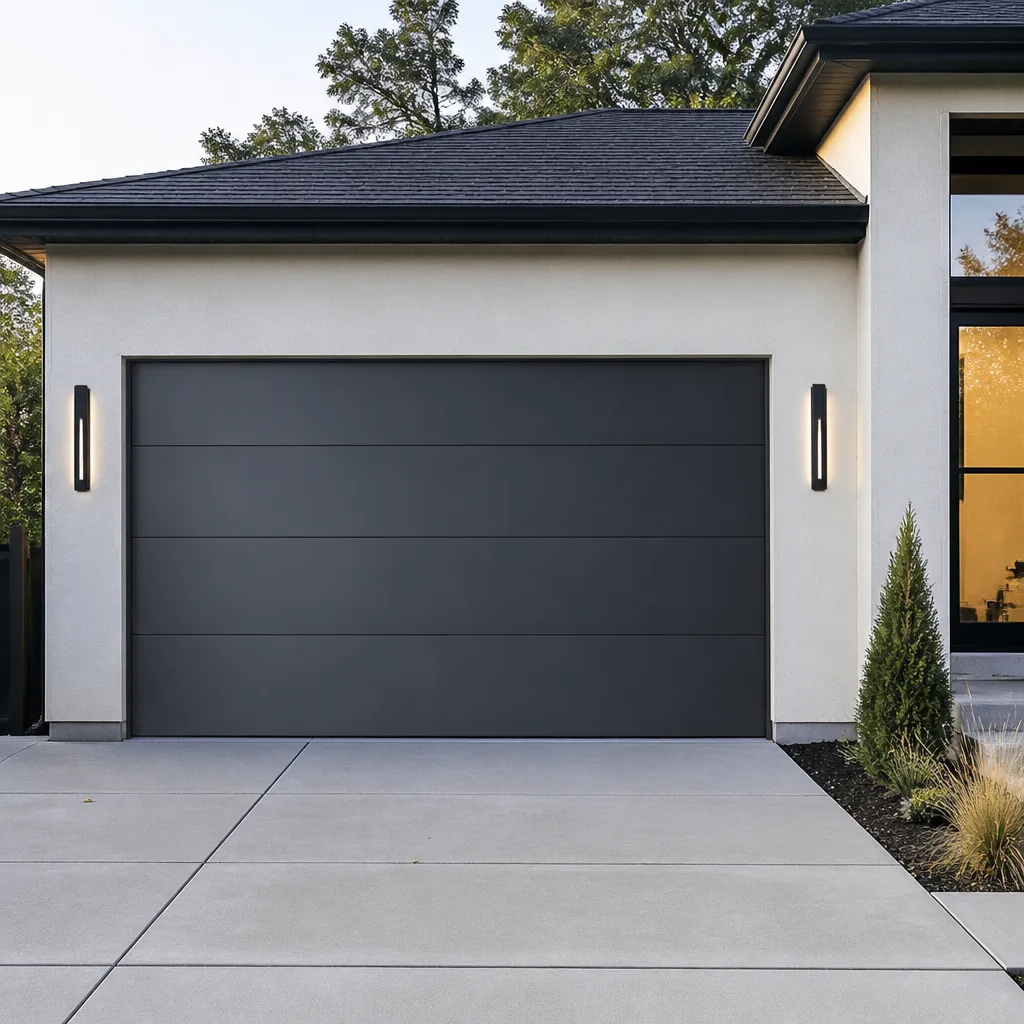 Modern flush
 Full-view glass
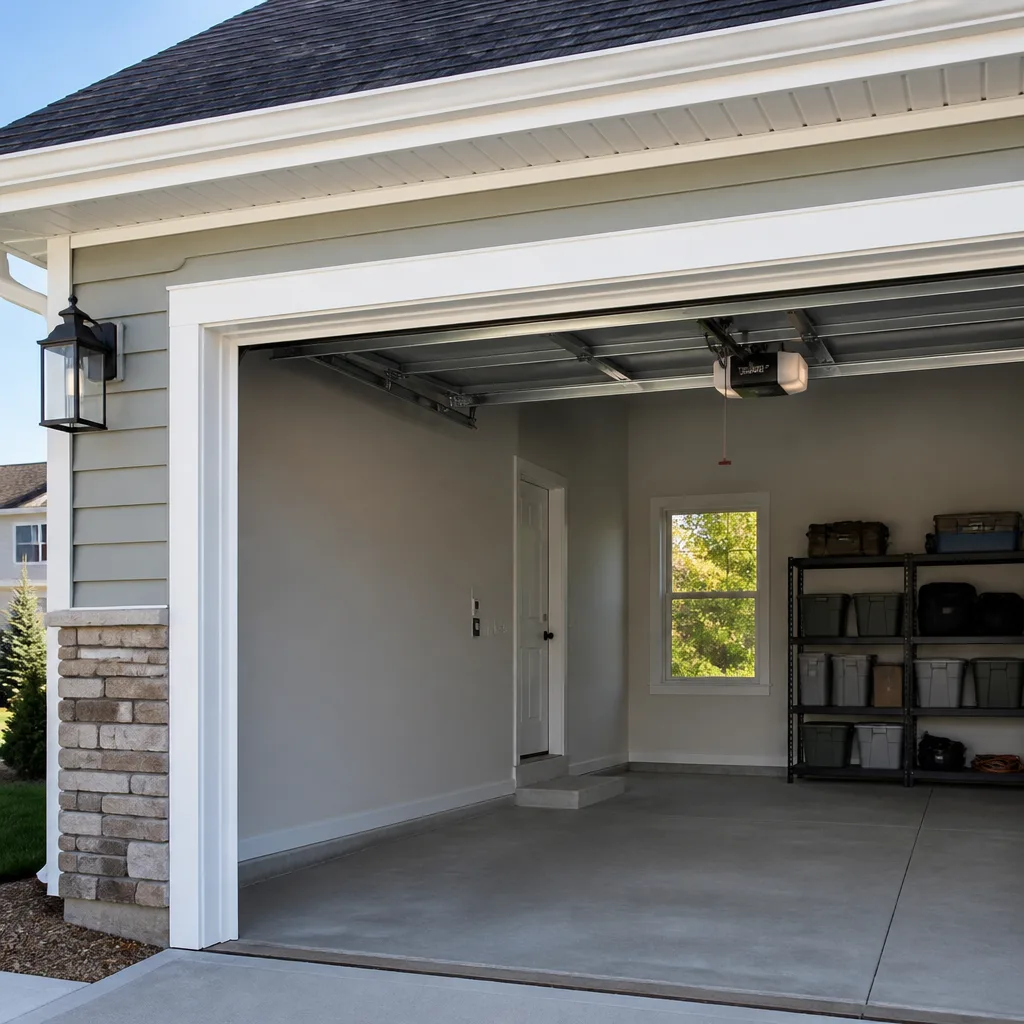 LiftMaster openers
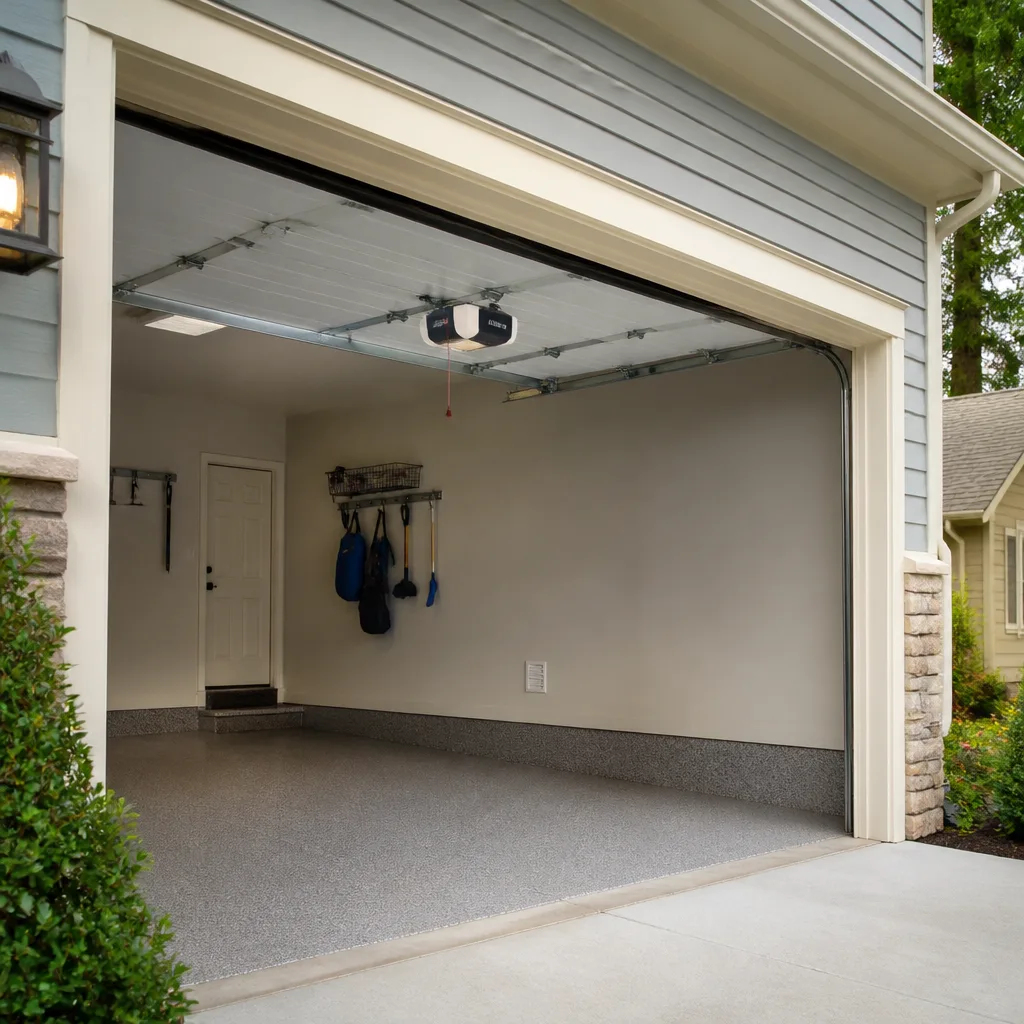 Chamberlain openers
Full 25-point door and opener safety check with every visit - springs, cables, rollers, tracks, and your LiftMaster or Chamberlain opener included
You get a price before we start. It does not change when the pro arrives.
Get your free estimateDIY vs Professional Garage Door: The San Mateo Homeowner’s Decision Guide
Most people think the DIY versus professional question comes down to how handy you are. It doesn’t. A torsion spring holds enough stored energy to send a winding bar through drywall, but that’s not the job San Mateo homeowners usually tackle and regret. The expensive mistake is quieter: adjusting spring tension by feel without knowing your door’s exact weight, then watching the opener burn out months later doing math it was never built for. This guide draws a clear line between what’s genuinely safe to handle yourself and what isn’t, how DIY work affects your manufacturer warranty, and what makes garage doors in San Mateo trickier than the average how-to video admits.
Quick Answer
Lubrication, safety-sensor alignment, remote programming, and visual inspections are reasonable DIY tasks. Spring work, cable replacement, and track realignment are not – they carry real injury risk and can void manufacturer warranties on LiftMaster, Chamberlain, Genie, and Clopay equipment. When in doubt, the deciding factor isn’t your skill level; it’s whether a mistake could injure you or damage the door beyond a simple fix.
Styles & brands we work with
- Raised-panel steel
- Carriage house
- Modern flush
- Full-view glass
- LiftMaster openers
- Chamberlain openers
Table of Contents
- Where the DIY Line Actually Falls
- What’s Genuinely Safe to Do Yourself
- Why Springs, Cables, and Tracks Are Different
- How DIY Repairs Affect Your Manufacturer Warranty
- The Hidden Cost of Doing It Yourself
- San Mateo Factors That Tip the Scale
- The Middle Ground: Prep Work Plus Precision Work
- How to Choose a Professional
Where the DIY Line Actually Falls
The garage door is one of the few systems in a home where a routine repair and a serious injury sit a few inches apart. That’s why the useful question isn’t “can I fix this?” It’s “what happens if I get it wrong?” Some tasks fail harmlessly. A misaligned sensor just makes the door refuse to close, and you try again. Other tasks fail catastrophically. A spring that lets go under load can break a hand or worse.
At Quarry Garage Door Repair, we’ve seen the whole spectrum – homeowners who saved real money on maintenance they handled correctly, and homeowners who turned a worn roller into a bent track and a door that wouldn’t close. The pattern is consistent: the tasks that go wrong are almost always the ones involving stored mechanical energy or precise alignment.
A practical way to sort any garage door job in San Mateo:
- Safe to DIY: lubrication, sensor alignment, remote and keypad programming, tightening visible bolts, wiping down panels, testing the auto-reverse safety feature.
- Risky but tempting: adjusting the travel limits on an opener, swapping a roller or hinge, replacing weatherstripping on a door that sits unevenly.
- Not DIY: torsion and extension spring work, cable replacement, track realignment, panel replacement, opener gear and logic board repairs.
The middle category is where most people get hurt or create a bigger bill. Travel limit adjustments look simple until the door stops closing flush, and then you’ve traded a five-minute fix for a service call plus a door that seals badly. If you’re unsure which side of the line a task lands on, that uncertainty itself is the answer – call before you touch it. For a closer look at what professional garage door repair actually covers, the scope is wider than most people expect.
What’s Genuinely Safe to Do Yourself
We’re not going to tell you every garage door task needs a professional. Some don’t, and doing them correctly extends the life of your door and opener. Here are the jobs where a careful homeowner with basic tools does just as well as we would.
Lubrication
Once or twice a year, wipe down the tracks and apply a garage-door-specific lubricant to the hinges, rollers, and springs. Not WD-40 on the tracks – that attracts grit. A silicone or lithium spray on the moving parts, and a rag on the tracks, is the right approach. This is the single best thing you can do for door longevity, and it’s completely safe.
Safety Sensor Alignment
The two sensors at the bottom of your door tracks should be aimed at each other, with a solid light on both. If one blinks, it’s misaligned or blocked. Straighten it, clear any cobwebs or leaves, and test it by passing an object through the beam while the door closes. If it reverses, you’re done. This is a five-minute task that fixes a large share of “my door won’t close” calls.
Remote and Keypad Programming
Reprogramming a remote or keypad on a LiftMaster, Chamberlain, or Genie opener is straightforward and covered in the manual. It’s also a normal thing to redo after a move or a battery change. If the remote worked yesterday and doesn’t today, check the battery before assuming the opener is failing.
Basic Inspection
Walk around the door and look at it. Are the rollers loose in their brackets? Is the door balanced – does it open smoothly by hand to about waist height and stay there? Are there frayed cables or a sagging panel? You don’t need to fix what you find, but knowing about it early prevents bigger problems. Tracking what you see also makes a service call faster.
These tasks are genuinely worth doing yourself. For anything involving the springs, cables, or opener internals, it’s a different conversation.
Why Springs, Cables, and Tracks Are Different
Torsion springs and the cables they connect to are the two components on a garage door that routinely cause serious injuries. A torsion spring holds the full weight of the door – typically 150 to 300 pounds on a standard residential door – and it stores that energy even when the door is closed. When a spring fails under load, it releases that energy instantly.
We won’t give step-by-step instructions for spring or cable work here, and that’s deliberate. There’s no safe version of a first attempt.
- Spring work: A torsion spring must be wound to a specific number of turns based on the door’s weight and spring size. Guessing the tension means the opener fights the door every cycle, which shortens the opener’s life. Getting it wrong at the winding bar can mean injury.
- Cable replacement: Cables are under tension whenever the door is up or down. A slipping cable can snap back with force and lacerate. Every cable job includes spring de-tensioning that has to be done in the right order.
- Track realignment: Bent or misaligned tracks can bind the door, and if the door comes off the track it’s a 200-pound panel falling in a confined space. Minor track adjustments are one thing; anything affecting the geometry of the door needs an experienced hand.
If a spring breaks or a cable snaps, don’t run the opener “just to see.” It moves the door on a system that’s already failed, and it can damage panels and the opener at the same time. Leave the door closed and call. Our garage door opener repair team sees the aftermath of “just testing it” more often than anyone would guess.
How DIY Repairs Affect Your Manufacturer Warranty
Garage door manufacturers build warranties around proper installation and trained service. If you disassemble an opener or work on spring hardware yourself, you can void the coverage on the components involved – even if the failure you later claim has nothing to do with your repair.
This matters most for equipment that isn’t cheap to replace:
- LiftMaster and Chamberlain openers: The logic boards, gear assemblies, and motor units are covered under warranty terms that assume professional service. A DIY board swap with a mismatched part usually ends coverage for the electronics.
- Genie openers: Same principle. Genie’s warranty language holds authorized service in mind, and self-repair on the gear or limits often disqualifies a later claim.
- Clopay and Amarr doors: Panel, section, and finish warranties assume the door was installed and maintained by qualified hands. A panel replaced with a slightly wrong part – a common DIY shortcut – can void the finish and structural warranty on that section.
There’s a second warranty angle that most homeowners don’t think about: mismatched parts. Clopay sections are matched to a specific door series, and an aftermarket hinge or roller of the wrong profile can accelerate wear on the panel. When we install or replace a part, we match it to your actual door model, which preserves the coverage that’s already in place. That’s part of the reason Quarry Garage Door Repair works on the brand you already have instead of steering you toward a replacement. If you’re weighing repair against replacement, we’ll tell you which actually makes sense.
The Hidden Cost of Doing It Yourself
DIY looks free until you price the tools and count the hours. A torsion spring job requires winding bars sized correctly for your spring – you can buy them, but you should also know you can’t reuse them safely if they’re the wrong size. Add the time to learn the process, watch the door for a few weeks to make sure nothing went wrong, and factor in the chance you call someone anyway for a problem you created. The DIY job that works out is cheaper than professional service. The DIY job that doesn’t is usually more expensive than the service call would have been.
Some specific cost patterns we see in San Mateo:
- Wrong tension, then an opener that dies: A new opener costs more than double a standard spring service. That math flips the decision quickly.
- Wrong part, then a warranty claim: Even a small mismatch can void the coverage on the affected component.
- Small repair becomes a large one: An ignored frayed cable becomes a bent panel when it fails mid-cycle. What would have been a cable replacement becomes a panel and cable job.
- Tools bought once, used once: Winding bars, spring measuring tools, and specific wrenches add up fast for a one-time repair.
Professional garage door work in San Mateo is priced per job by a written estimate, so the quote you agree to before work begins is the number you pay. That predictability is part of the value – a professional quote is a known cost. A DIY attempt is an open-ended one.
San Mateo Factors That Tip the Scale
San Mateo garages have some quirks that make the professional-versus-DIY decision lean more toward professional work than in some other places. None of these is unique to one neighborhood, but they come up often in the older housing stock across the city.
Low-Clearance and Non-Standard Openings
Many San Mateo homes have garages without the headroom for a standard torsion spring setup – low-clearance conversions with springs mounted above the door track or tucked into tight side clearances. Spring work in these spaces is harder to get right because the geometry isn’t standard, and the wrong spring size forces the opener into constant strain. A homeowner who measures by eye and orders a spring by the door’s width alone will not get the right part.
Aging Hardware Without Clear Part Numbers
A large share of doors in San Mateo date to specific construction waves, and their original documentation is long gone. Casting around for a compatible Carell or Clopay hinge without knowing the door model is a guessing game. When we service a door in San Mateo, matching the part across the manufacturer’s series takes a phone call to a supplier – not a search on a marketplace site. That’s the kind of detail worth paying for.
The Real Local Climate Factor
San Mateo’s mild climate is genuinely friendly to garage doors. Mild winters and dry summers mean fewer freeze-and-swell cycles and less seasonal wear than cold-weather climates. That’s good news for longevity. The downside is that wear creeps up quietly – springs get to the end of their cycle count without any dramatic warning, and a door that felt fine a year ago can suddenly snap. Regular inspection matters more here than any dramatic seasonal repair.
Who to Call When You Can’t Do It
If a job needs a professional in San Mateo, the specialist-vs-generalist question is real. A handyman who’s good at 30 different categories usually doesn’t know the specific geometry of a Chamberlain opener’s travel limits or the cable routing on an Amarr door. Single-trade focus pays off exactly on the jobs most likely to go wrong.
The Middle Ground: Prep Work Plus Precision Work
Here’s the approach that saves the most money without risking injury: split the job. You handle the parts that are safe and simple, and a professional handles the parts that carry risk or need a precise fit. This isn’t a gimmick – it’s how we work with homeowners on many jobs.
- Clear the space. Empty the car out, clear the garage floor, and move anything blocking access to the door and opener. If we’re working under the door, an empty floor makes the job faster.
- Document what you’ve got. Write down the door’s approximate age, the opener’s brand and model, and any symptoms you’ve noticed. Take a photo of the opener label and the hardware. This is information you can gather safely and it saves diagnostic time.
- Handle lubrication, sensor cleaning, and battery swaps. These are the DIY tasks you should be doing anyway, and doing them before a service call lets us focus on the actual problem.
- Call for anything involving springs, cables, opener internals, or panel damage. This is where the work needs the professional, and where the quote covers the precision rather than the guesswork.
- Ask questions. A good technician will explain what they found and why. You’ll know your system better afterward, and the next minor issue may be something you can handle without a call.
Prepping yourself means the professional’s time goes toward the parts that actually need skill. On a lot of jobs, that’s the difference between a tight scope and a drawn-out service call.
How to Choose a Professional
When the decision tips toward calling someone, the next question is who. In San Mateo, garage door services range from dedicated door specialists to general handymen adding a category – and the two are not interchangeable on the tasks that carry real risk.
What to look for:
- Specialist focus. Garage doors only is a meaningful signal. Someone who does garage doors and 30 other things is learning your door on the job.
- Brand fluency. Ask how they service your specific opener or door brand. If they can’t tell you what’s unusual about a LiftMaster travel limit or a Clopay panel profile, they’re guessing.
- Written estimate before work starts. The number you agree to should match the invoice. Any service that wants to start work “and figure out the price after” is a red flag.
- Insured. The technicians working on your door should be insured. Ask.
- Diagnosis before recommendation. A quote that jumps straight to replacement without checking the door’s balance and cycle count is a sales pitch, not a diagnosis.
Our technicians have up to 11 years of experience across the eight major garage door and opener brands – LiftMaster, Chamberlain, Genie, Clopay, Amarr, Wayne Dalton, Craftsman, and Raynor – covering the vast majority of doors and openers actually installed in San Mateo homes. That’s the point: diagnosed correctly, fixed the first time.
Common Mistakes to Avoid
- Adjusting spring tension by feel. Springs need to be wound to a specific turn count based on the door’s weight. Guessing by feel works until the opener dies under the strain, and the opener replacement costs more than the spring service would have.
- Going back to DIY after a spring break “just to check.” Don’t run the opener after a spring failure. It moves a door on a system that’s already failed, and it can bend panels in the process. Leave the door closed and call.
- Ordering parts by door width alone. San Mateo homes have a lot of doors whose original documentation is long gone, and matching a hinge, roller, or spring requires the door model, not just the width. The wrong part often voids the manufacturer’s warranty on the affected section.
- Ignoring an opener that’s working harder than it should. A door that feels heavy or slow is a warning. Running it anyway burns through opener gears, and the fix at that point is much bigger.
- Lubricating the tracks instead of the moving parts. Greasy tracks attract dust and grit, which wears the rollers faster. Lube the hinges, rollers, and springs; wipe the tracks clean.
- Assuming a handyman is a garage door specialist. A door that falls off a misaligned track is a 200-pound panel in a confined space. On tracks, cables, and springs, experience on your specific system is worth more than general handiness.
- Skipping the balance test. Once a year, disconnect the opener and lift the door by hand to waist height. If it won’t stay there, the springs are out of balance – a minor adjustment now avoids a bigger job later.
See the difference
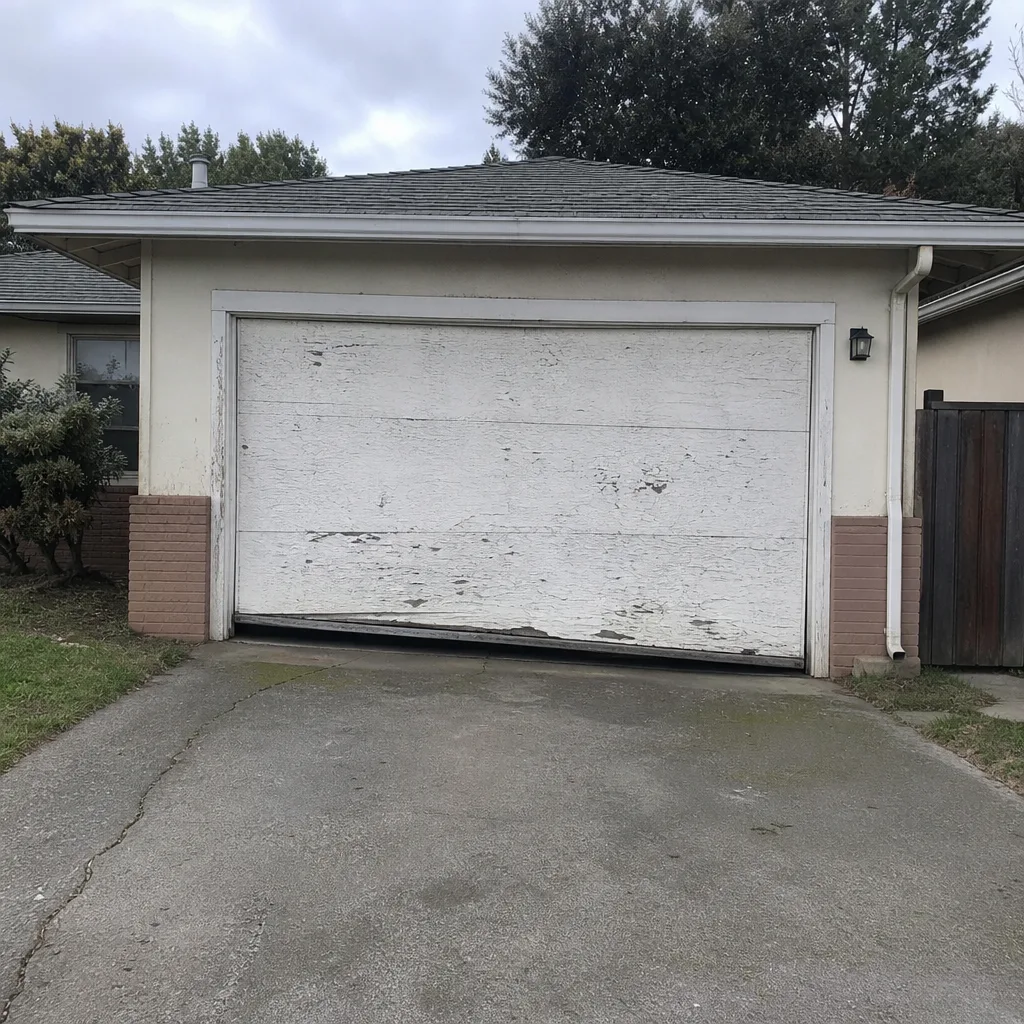 Before
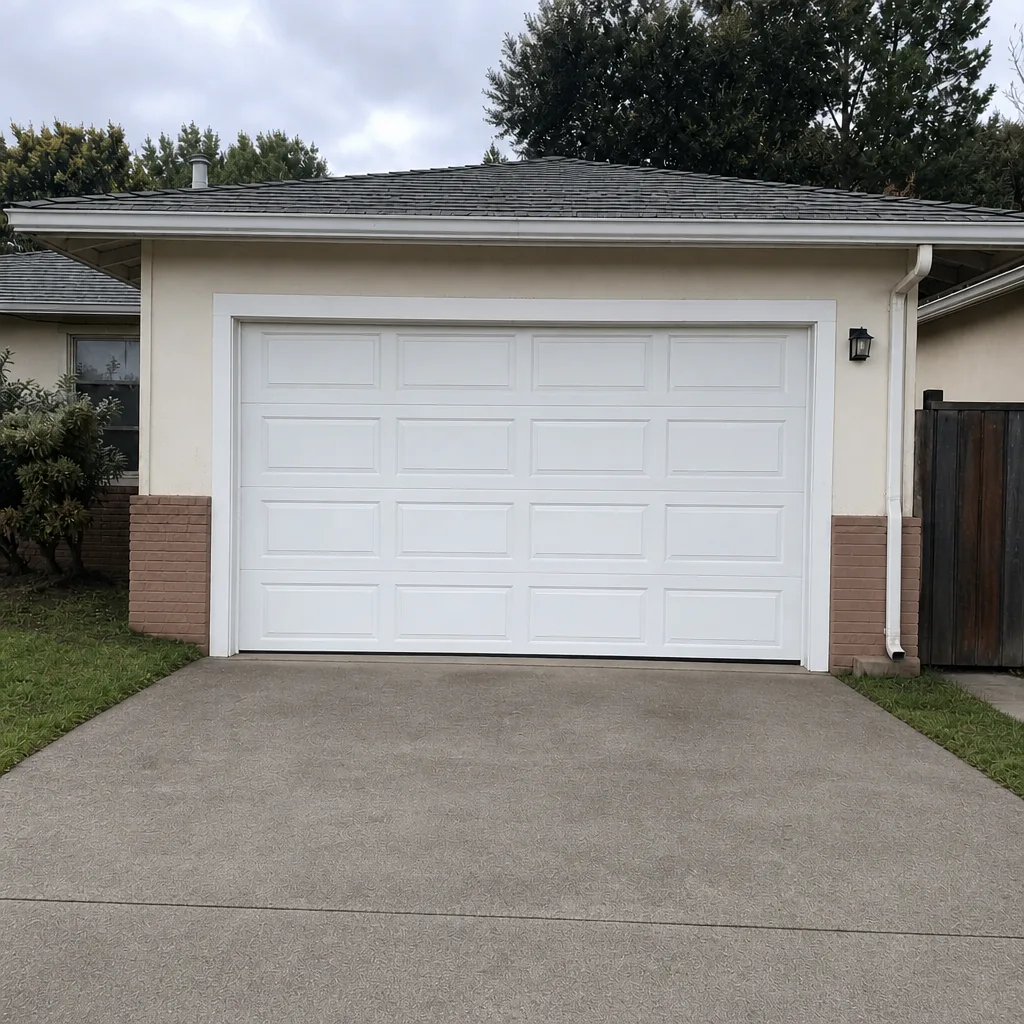 After
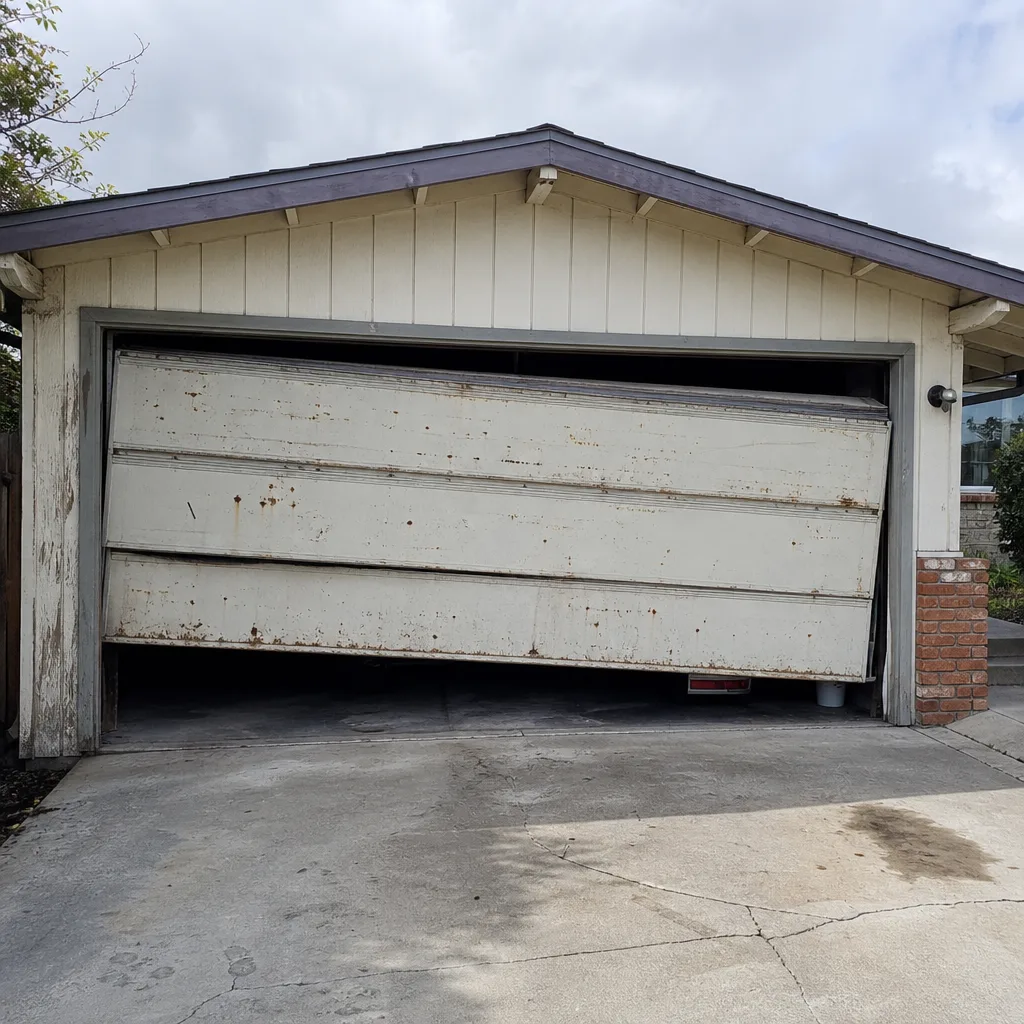 Before
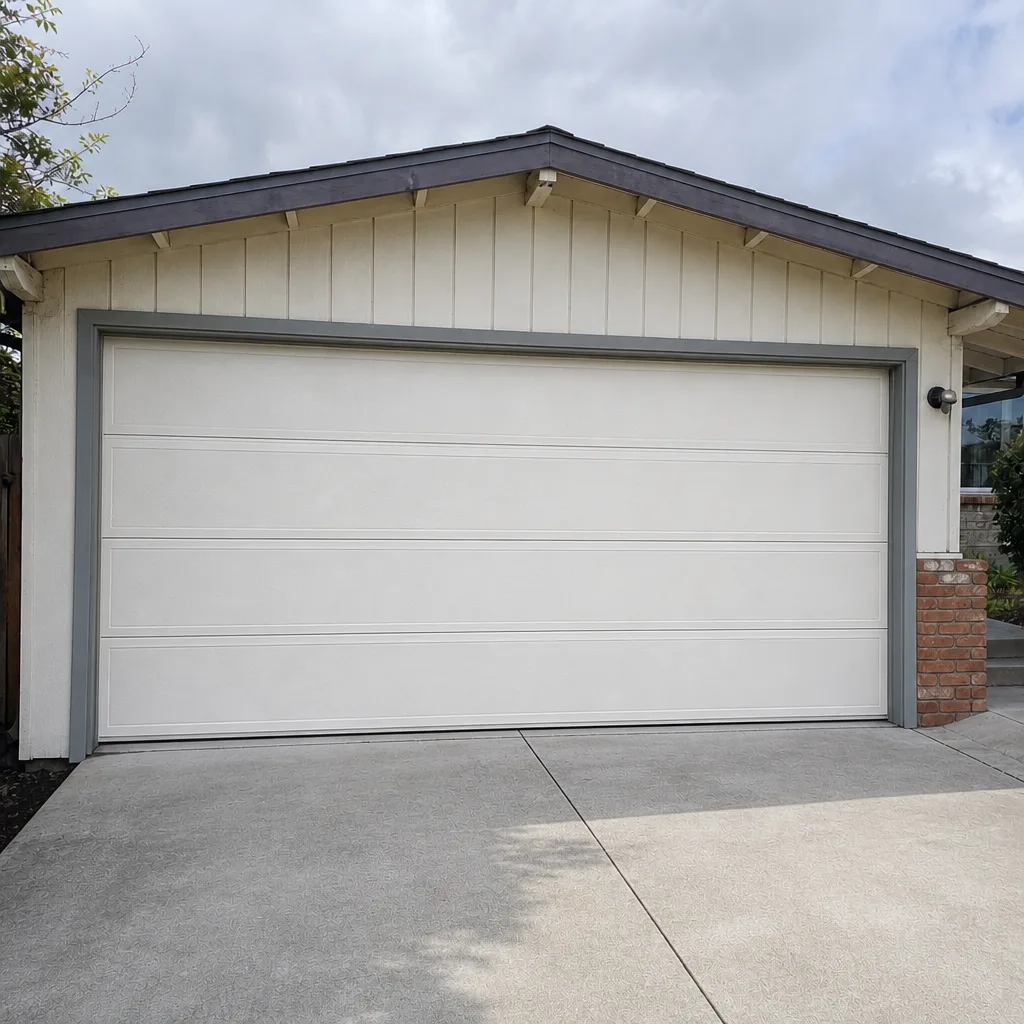 After
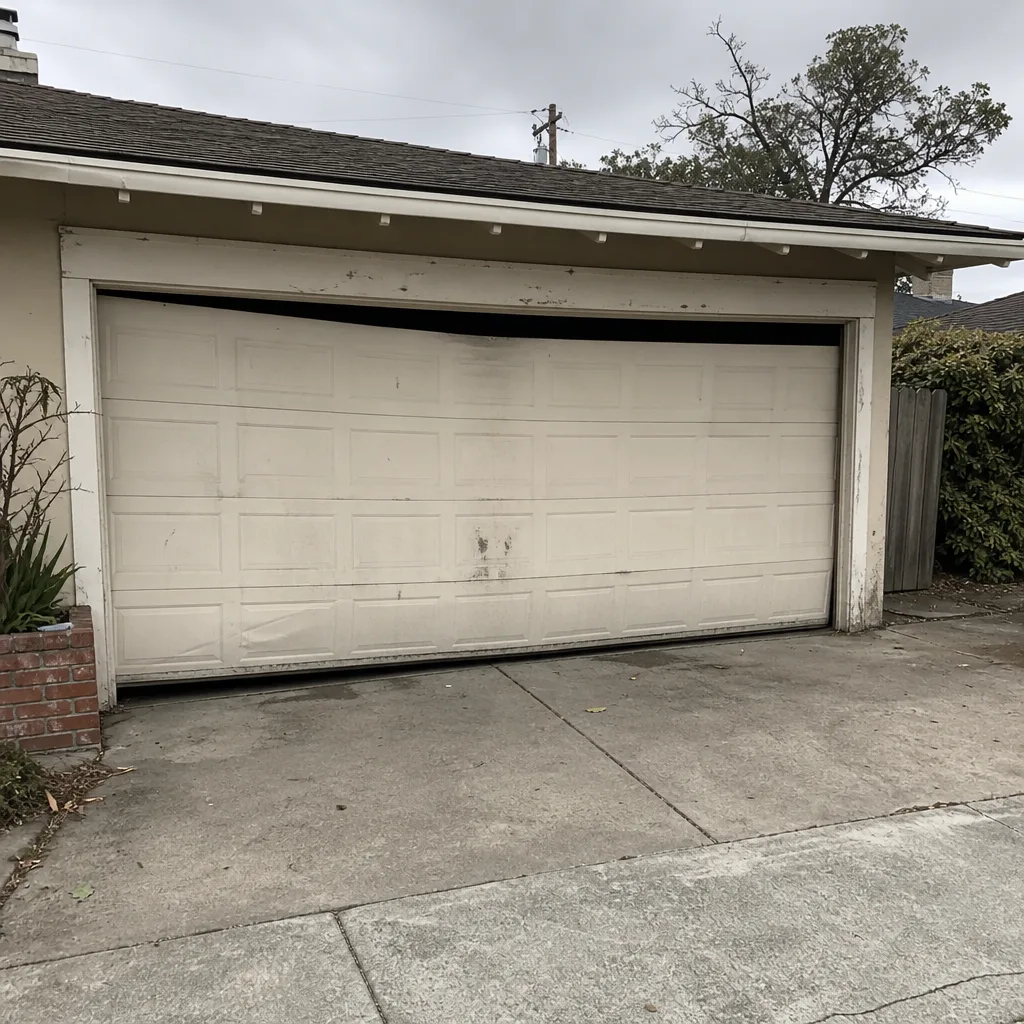 Before
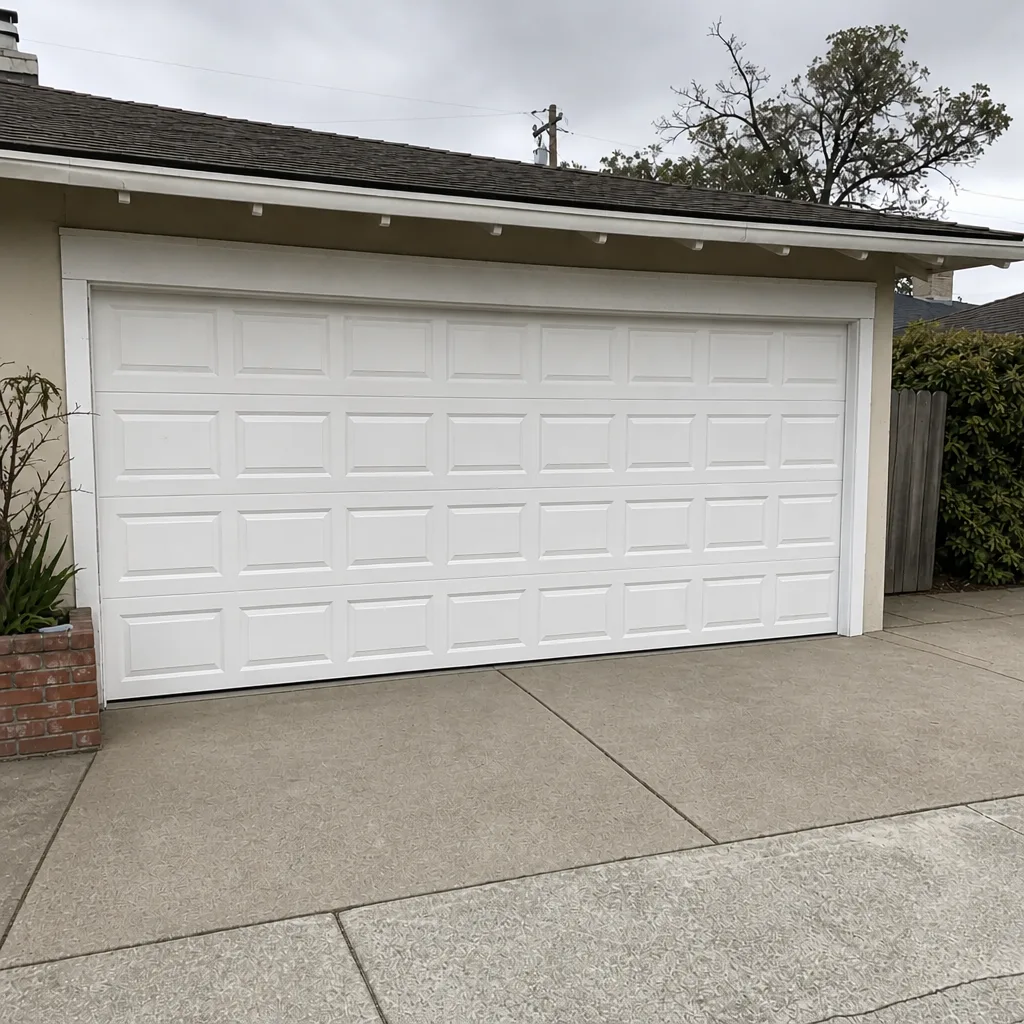 After
When to Call a Professional
Call a professional for any of these, and don’t wait: a broken spring, a snapped or frayed cable, a door that’s come off its track, a door that’s visibly out of balance, an opener that reverses without an obstruction, a door that closes on something and doesn’t auto-reverse, or any job that requires disassembling the opener or the spring assembly. These are the tasks where a mistake is either a serious injury risk or a much larger repair than the original problem.
Quarry Garage Door Repair offers free estimates in San Mateo – call (877) 373-8927. We answer 24/7. Fast dispatch from 7am to 7pm, Sunday through Friday. If you want a second opinion on a door you’re not sure about, or a written quote before you commit, that’s the call. New to the area and looking for a reliable San Mateo garage door specialist? Start here.
Frequently Asked Questions
No. Torsion and extension springs store enough energy to cause serious injury if handled incorrectly, and most jurisdictions and manufacturers assume a trained technician for spring work. Even if you’re mechanically confident, the combination of stored energy and the precision needed to match spring size to door weight makes spring replacement a professional job. Leave the door closed and call (877) 373-8927 – estimates are free.
Yes, in most cases. LiftMaster and Chamberlain warranties are written around proper installation and trained service. Disassembling the opener or substituting untested parts can void the coverage on the affected components, even if the failure you later claim isn’t directly related. If you’re unsure, ask before you open the opener – the coverage is worth more than the risk. Call us for a written estimate before you go further.
Yes. Remote and keypad programming is a standard DIY task across LiftMaster, Chamberlain, Genie, and most other openers, and the manufacturer’s manual walks you through it. If the remote worked previously and stopped, check the battery first. If it still won’t work, the opener or the receiving unit may need a look – call us for a free diagnostic estimate.
A garage door specialist works on garage doors exclusively, which means they know the specific geometry, spring sizes, cable routing, and opener internals of the major brands. A handyman works across many categories and meets your specific door on the job. For lubrication and sensor work, the difference doesn’t matter much. For springs, cables, and opener internals, specialist experience is usually worth more than general handiness. Call (877) 373-8927 to talk through what your door needs.
Repair usually makes sense when the door’s panels are intact, the track is straight, and the failure is in the springs, cables, or opener. Replacement is usually the better decision when multiple panels are damaged, the door body is warped or rusted through, or the safety systems can’t be brought back into spec. Since our work covers repair, opener service, and new installation, we have no reason to push one direction over the other – we’ll tell you which one actually makes sense. Call (877) 373-8927 for a straight answer and a written estimate.
Lubricate the hinges, rollers, and springs once or twice a year, wipe down the tracks with a dry cloth, clean and test the safety sensors, and run the balance test by disconnecting the opener and lifting the door by hand. These four tasks take about fifteen minutes total and prevent a large share of the repair calls we see. Anything involving the springs, cables, or opener internals is a professional job – call (877) 373-8927 if something doesn’t look right.
The Bottom Line
The DIY-versus-professional line on a garage door isn’t about skill level. It’s about stakes. Lubrication, sensor alignment, remote programming, and visual inspections are genuinely yours to handle, and doing them well extends the life of your door. Springs, cables, tracks, and opener internals are a different category – the failure mode is serious, and the warranty consequences can be too. If you’re in San Mateo and weighing a do-it-yourself repair against a service call, the deciding question is simple: if this goes wrong, what’s the worst-case outcome? If the answer involves injury, a warranty claim, or a much bigger repair, call before you touch it. Free estimates and a written quote come first.
Written by the team at Quarry Garage Door Repair.