
Last updated November 15, 2026
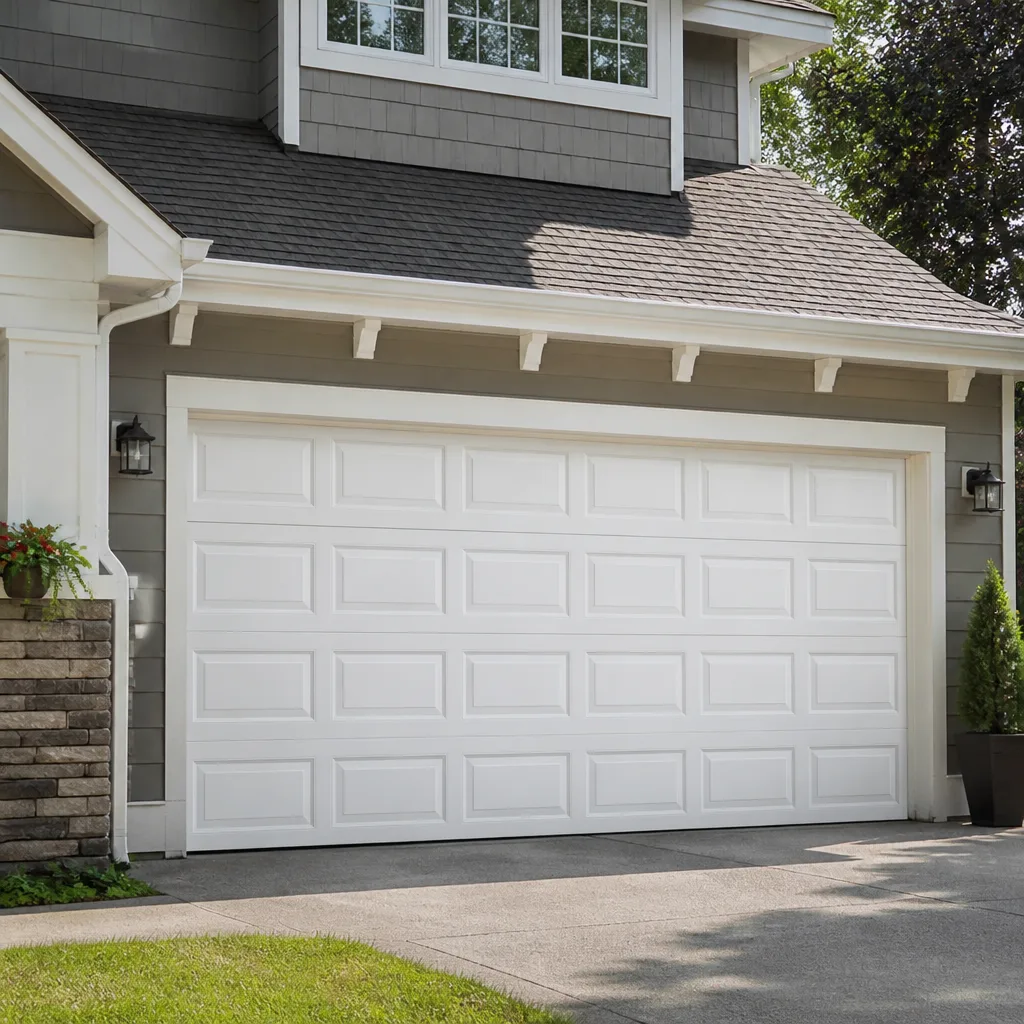 Raised-panel steel
 Carriage house
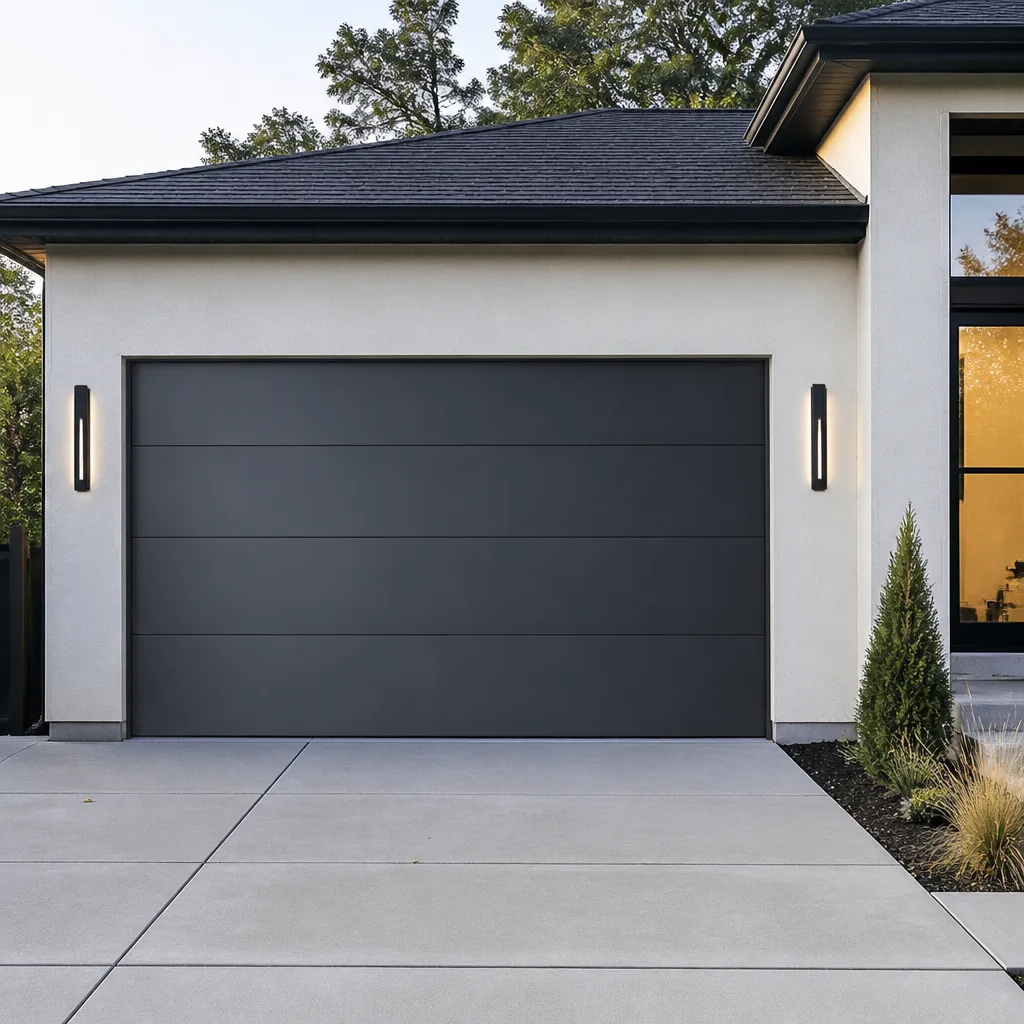 Modern flush
 Full-view glass
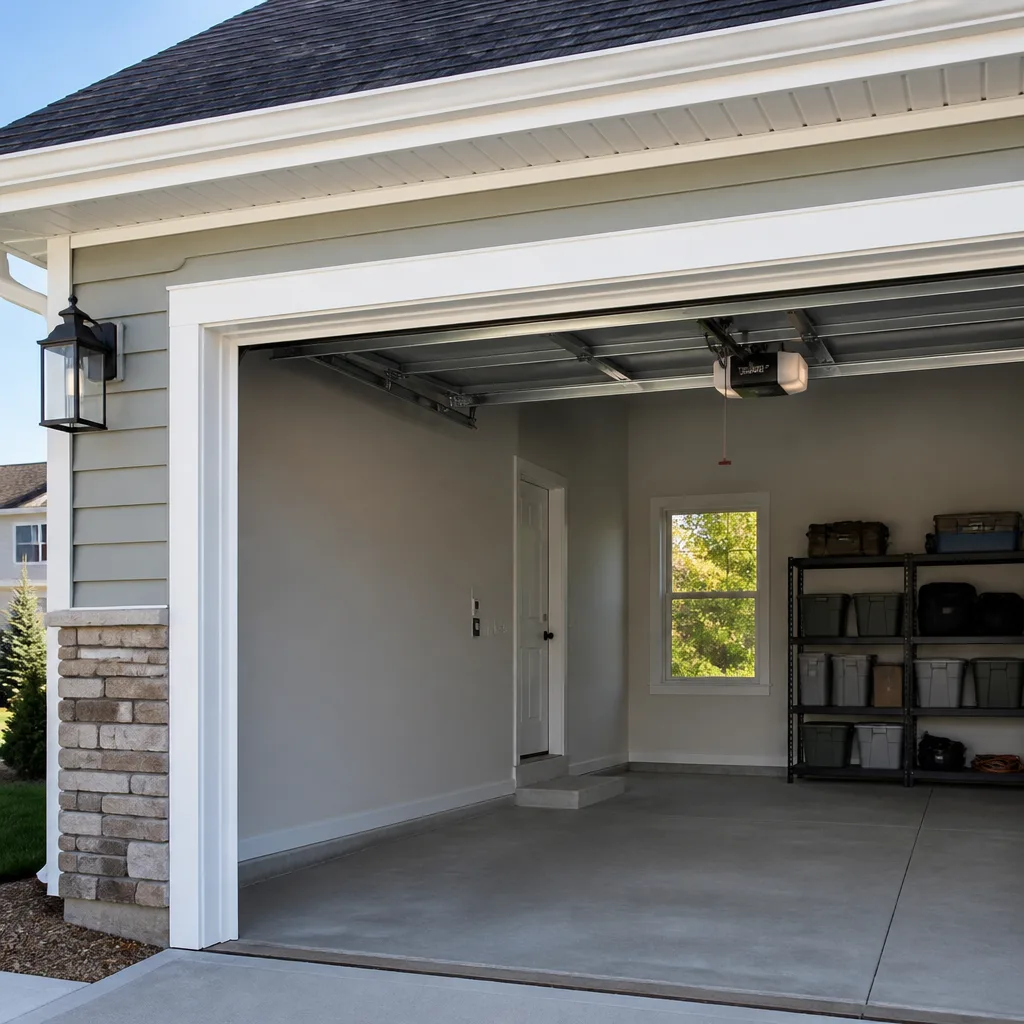 LiftMaster openers
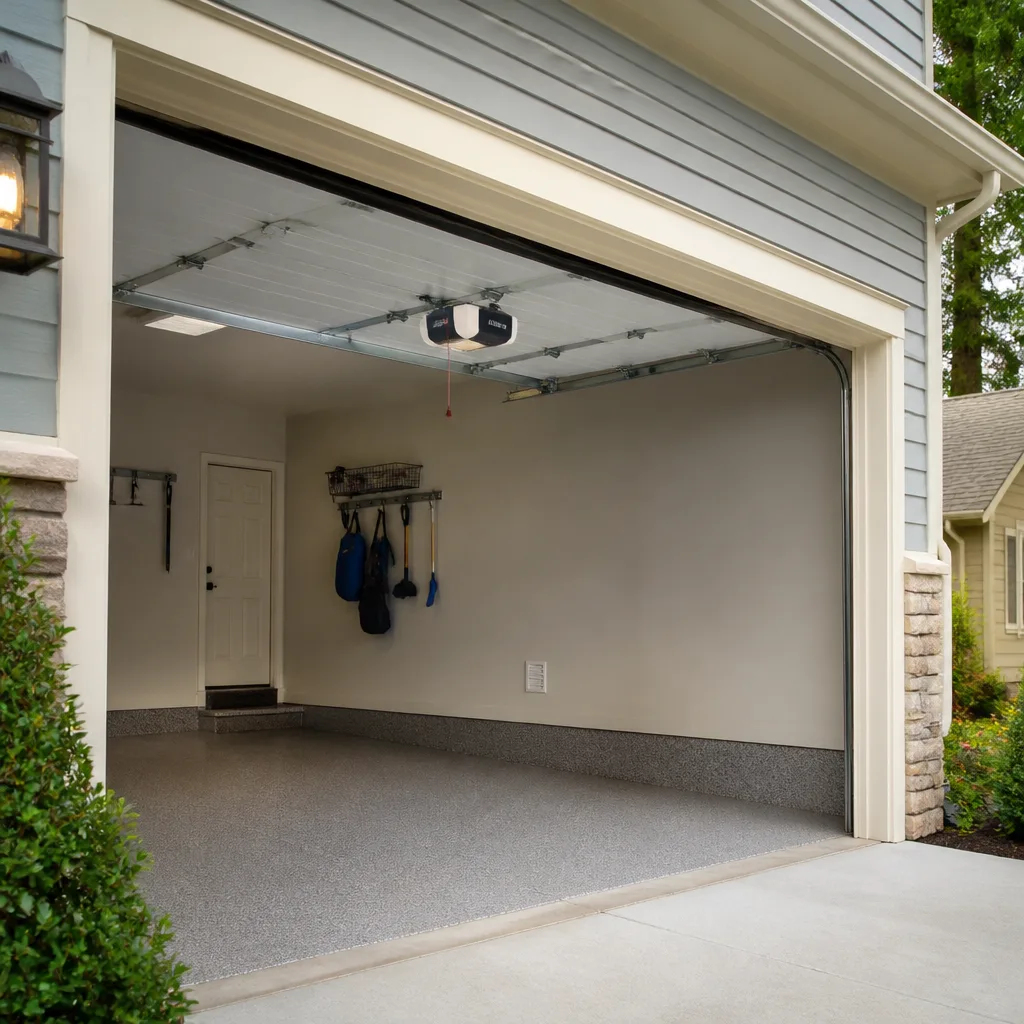 Chamberlain openers
Full 25-point door and opener safety check with every visit - springs, cables, rollers, tracks, and your LiftMaster or Chamberlain opener included
You get a price before we start. It does not change when the pro arrives.
Get your free estimateGarage Door Emergency Preparedness Guide for San Mateo Homes
Most garage door failures we see in San Mateo don’t announce themselves with a crash. They arrive quietly: an opener that groans and stalls at the halfway point, a door that hangs crooked after the ground shakes, a track that takes a hit from a fallen branch after a winter storm. The surprise isn’t the failure itself. It’s how many homeowners have never once checked where the manual release cord hangs on their own door, or what to do when the opener loses power and the car is stuck inside. This guide gives you a real action plan for before, during, and after the emergencies most likely to strand you outside your own home in San Mateo. We’ll cover how to manually operate your specific opener, what to inspect after an earthquake, which backup options actually help, and how to build a garage door emergency kit for under $30 total.
Quick Answer
Garage door emergency preparedness in San Mateo means three things: knowing how to manually release and lift your door by hand when the opener fails, having a post-earthquake inspection routine for the door, tracks, and opener before you press the remote again, and keeping a small emergency kit (a manual release pull, a flashlight, and a set of hand tools) accessible near the garage. The biggest risk isn’t structural damage after a shake or storm. It’s a homeowner who’s never learned where the release cord is or how to use it.
Styles & brands we work with
- Raised-panel steel
- Carriage house
- Modern flush
- Full-view glass
- LiftMaster openers
- Chamberlain openers
Table of Contents
- Why San Mateo Garages Face Predictable Emergencies
- How to Manually Operate Your Garage Door During a Power Outage
- Post-Earthquake Inspection: What to Check Before Resuming Automatic Operation
- Battery Backup Openers: What They Actually Cover
- When a Storm or Debris Bends a Track or Panel
- Building a Garage Door Emergency Kit for Under $30
- When to Call a Professional
- Frequently Asked Questions
Why San Mateo Garages Face Predictable Emergencies
San Mateo sits on ground that moves and collects water in the same season. Earthquakes of varying sizes are a fact of life across the Peninsula, and winter atmospheric rivers can dump a month’s worth of rain in a few days. Neither event is a surprise. Both create garage door failure scenarios that are entirely predictable but rarely planned for.
A moderate earthquake can knock a door off its roller track, shift the torsion bar alignment, or pop the opener’s trolley out of its carriage. It doesn’t take a collapsed wall to strand you. A winter storm can drop a eucalyptus branch across your driveway and bend the bottom panel or bow a vertical track. In both cases, the door itself is fine mechanically. What fails is the homeowner’s response.
Homes across San Mateo neighborhoods like Baywood, Hillsdale, and the streets around Central Park tend to have a mix of older doors and newer systems, often a Clopay or Genie setup original to the house with an opener someone upgraded years later. That mix of door brand and opener brand is common, and it’s exactly why knowing your specific equipment matters before an emergency, not during one.
So plan for two scenarios:
- Ground movement. The door needs a full inspection before you re-engage the opener.
- Storm impact. The door needs to be secured and stabilized before you use it again.
Neither takes long to prepare for. Both take far longer to recover from if you don’t.
How to Manually Operate Your Garage Door During a Power Outage
Every automatic garage door opener has a manual release that disengages the door from the motor so you can lift it by hand. The release cord hangs from the trolley, usually a red or red-tipped handle on a rope. Pull it down and toward the door to disengage the carriage. Then lift the door slowly by its bottom edge and prop it open. To re-engage, close the door fully and pull the release cord back toward the opener until the carriage clicks into the trolley.
That’s the general process. The details vary by opener. Here’s how it breaks down for the five openers we most often see on doors in San Mateo homes.
- LiftMaster. The manual release runs through a red-handled rope from the trolley. Pull it firmly down and toward the door to disengage. LiftMaster models with battery backup (identifiable by the backup unit on the opener head) may let you run the door normally for a few cycles before you need to release it.
- Chamberlain. Nearly identical to LiftMaster in release design. The cord drops from the trolley, clips into a red handle, and releases on a firm downward pull. If the release feels stiff, don’t yank harder; check that the trolley isn’t already partially disengaged before trying again.
- Genie. Genie release cords are sometimes shorter and attach to the trolley differently than LiftMaster or Chamberlain. Find the red handle first, then pull straight down. On Genie screw-drive models, the manual release may feel tighter than a belt-drive because the drive shaft holds more resistance.
- Craftsman. Older Craftsman openers use the same red-handle release design. Because these are legacy systems, the release cord may have frayed over time. Check it once a year and replace it if the rope shows wear before the emergency comes.
- Raynor and other commercial-style openers. If your Raynor opener has a chain hoist or a wall-mounted release, treat it differently from a standard residential pull cord. If you’re not sure how the manual release works on your specific model, get it confirmed before you need it.
Two safety points that matter. Don’t run to the manual release if your door uses high-tension springs or cables mounted above the door. These operate under heavy load and are one of the most dangerous parts of any garage door system. Never try to adjust, lubricate, or inspect a torsion spring or its cables yourself. That’s a job for a trained technician, every time. The same goes for the opener’s wiring and electrical panel connection.
If your door won’t release by hand, it usually means the trolley is jammed, the carriage is misaligned, or the spring tension has shifted. Don’t force it. Call us at (877) 373-8927 and we’ll get a technician out for garage door opener repair. We answer 24/7. Fast dispatch from 7am to 7pm, Sunday through Friday.
Post-Earthquake Inspection: What to Check Before Resuming Automatic Operation
After any noticeable shaking, don’t press the remote. Inspect the door first. The sequence matters: check for damage before you ask the opener to move a door that may be off its track or out of balance.
- Look at the tracks. Both vertical and horizontal tracks should be straight, parallel, and free of bends. A track knocked out of alignment by ground movement will send the door off the rollers the moment the opener tries to lift it.
- Check the rollers and hinges. Rollers should sit fully inside the track. Missing or popped rollers mean the door isn’t ready to run.
- Inspect the panels. Look for dents, cracks, or panel separation at the seams. A panel that’s pulled out of its hinge will scrape or jam once the opener engages.
- Test the balance by hand. Lift the door manually halfway and let go. A properly balanced door stays put. A door that drops immediately or feels unusually heavy has a spring or cable issue. Stop there and don’t run the opener.
- Check the opener unit and its rail. The opener should hang level and its rail should be straight. Look at the trolley and carriage for signs of disengagement, and reset the manual release only when everything else is confirmed sound.
- Reset the safety sensor alignment. On LiftMaster, Chamberlain, and Genie models, the safety sensors at the bottom of each track need to be aligned and their indicator lights steady before the door will run automatically. A knock can shift them slightly.
- Run one slow cycle by remote. Once everything above checks out, run the door one full cycle and watch it from the side. Any hesitation, grinding, or uneven movement means stop and call.
If the door is visibly stuck or the springs or cables have shifted, keep the door down and call a professional. That’s not a lift-by-hand job.
Battery Backup Openers: What They Actually Cover
Battery backup on a garage door opener runs the door for a limited number of cycles during a power outage. It doesn’t run the door indefinitely, and it doesn’t power anything else in your garage. Think of it as enough to get in and out a few times before normal power returns.
Coverage depends on the model.
- LiftMaster and Chamberlain battery backup makes. Both brands sell models with integrated backup units. The backup runs a limited number of cycles per charge, typically enough for a day or two of normal use depending on traffic. Confirm the backup is actually charged by checking the opener’s indicator light.
- Genie battery backup. Genie’s backup option similarly covers a handful of cycles during an outage. On Genie models, the backup may need to be enabled through the wall control or app.
- Craftsman legacy systems. Many older Craftsman openers have no battery backup at all. If you’re on a legacy Craftsman unit, the manual release is your backup, not the motor.
What battery backup doesn’t do: it won’t lift a door that’s off its track, it won’t fix a disengaged trolley, and it won’t replace a manual release you’ve never located. If your opener is a LiftMaster or Chamberlain without battery backup, we can talk through a replacement opener with backup during a Quarry Garage Door Repair estimate. If you have a legacy Craftsman and want to upgrade, a full garage door repair and opener assessment will tell you whether replacement makes more sense than repair.
When a Storm or Debris Bends a Track or Panel
If a storm drops a branch on your door or a car clips the bottom panel, the immediate goal is to secure the door and prevent further damage. Don’t run the opener. A bent track or panel under motor power will rip rollers, bend hinges, or damage the door body beyond repair.
Your first steps:
- Stop using the door. Take the remote off the wall and don’t press it. Use the manual release only if the door is safe to lift by hand and you need to get a car out.
- Clear debris. Remove any branches, limbs, or loose material from the driveway and around the door without moving the door itself.
- Inspect the damage from the outside. Note which panel is bent, where the track is out of alignment, and whether the door sits level. Photograph everything for your estimate.
- Secure the door if it’s up. If the door is stuck in the open position, don’t leave it. A propped door that’s partially off its track can drop. If it’s safe to lower manually, do so; otherwise, call a technician.
- Call for repair. A bent track or a dented panel needs a trained technician to assess whether the track can be straightened or must be replaced. A Clopay or Amarr panel can often be matched and replaced without touching the rest of the door. A track replacement is usually a straightforward job.
In our experience, the most common mistake after storm impact is running the opener “just to see” if the door still works. That’s how a $200 track repair becomes a full door replacement.
Building a Garage Door Emergency Kit for Under $30
Every San Mateo homeowner should keep three items accessible in the garage, mounted on the wall or in a drawer the homeowner can reach without a ladder. Total cost, under $30:
- A manual release pull with an extended cord (around $10). If your opener’s release cord is high or short, an extension pull gives you a firm grip at chest height. Check that it’s rated for your door’s weight.
- A high-lumen LED flashlight (around $12). Power outages at night leave the garage pitch dark. Store it in the garage on a hook, not inside the car.
- A pair of adjustable pliers and a screwdriver (around $8 combined). These aren’t for adjusting springs or cables. They’re for loosening a hinge pin, tightening a bracket, or removing a bent bracket so a technician can inspect the door when they arrive.
Add a small card to the kit with two phone numbers: (877) 373-8927 and the number of a neighbor who can help if you need to clear debris or move a car. That’s a full emergency kit for under $30 that will pay for itself the first time it’s needed.
See the difference
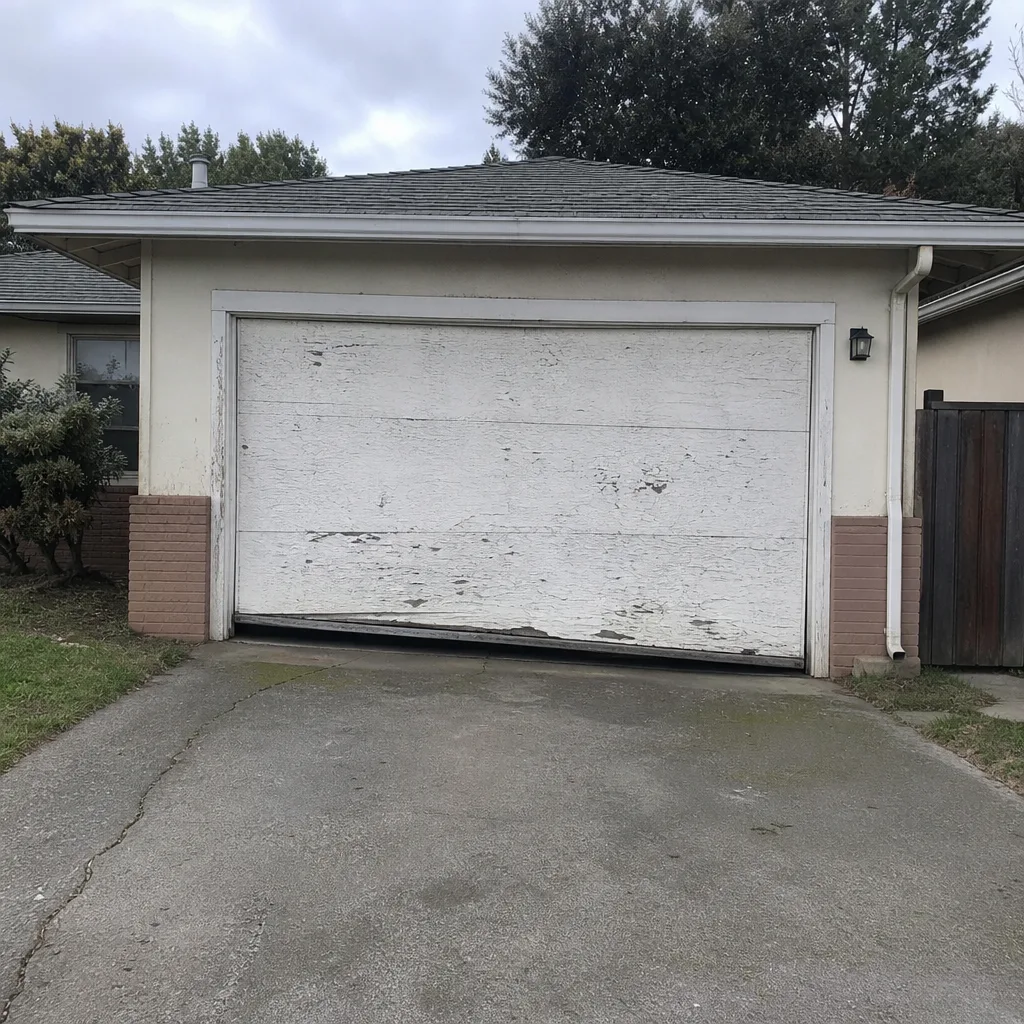 Before
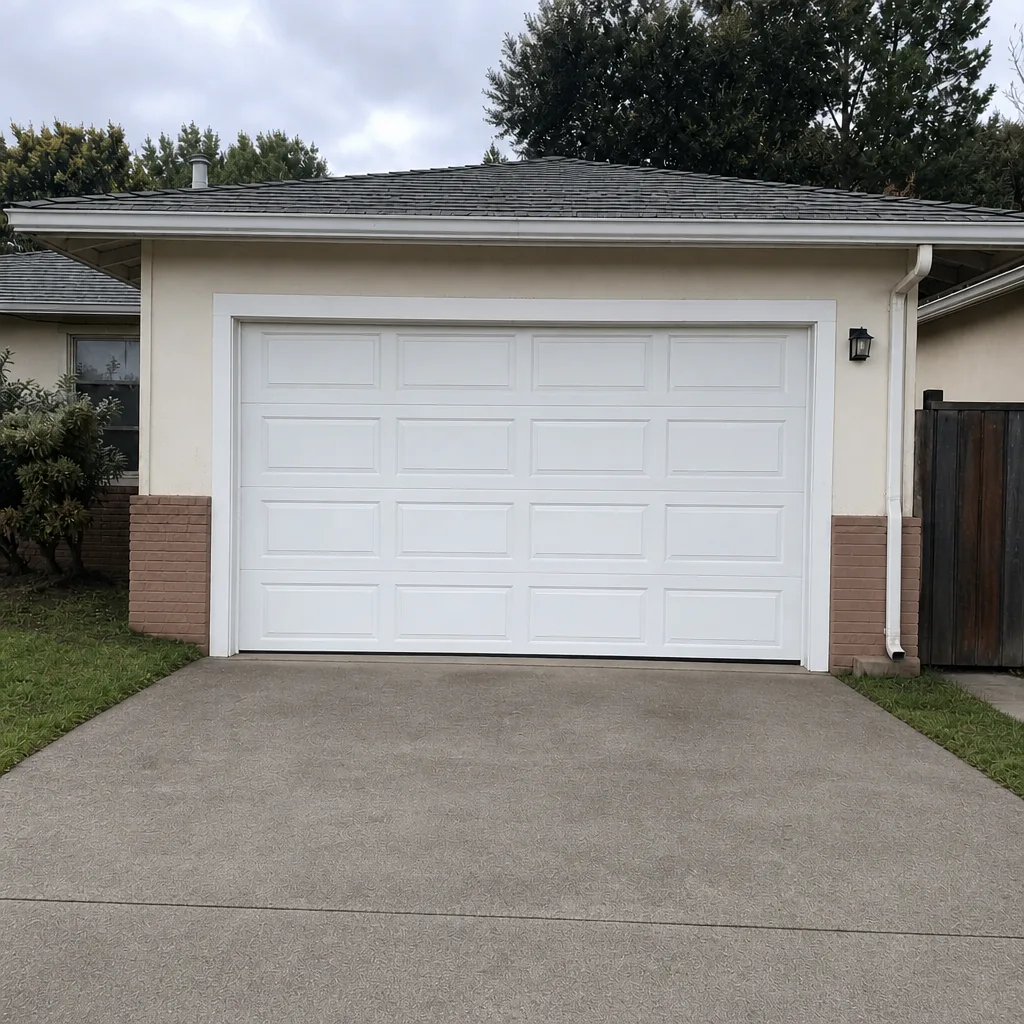 After
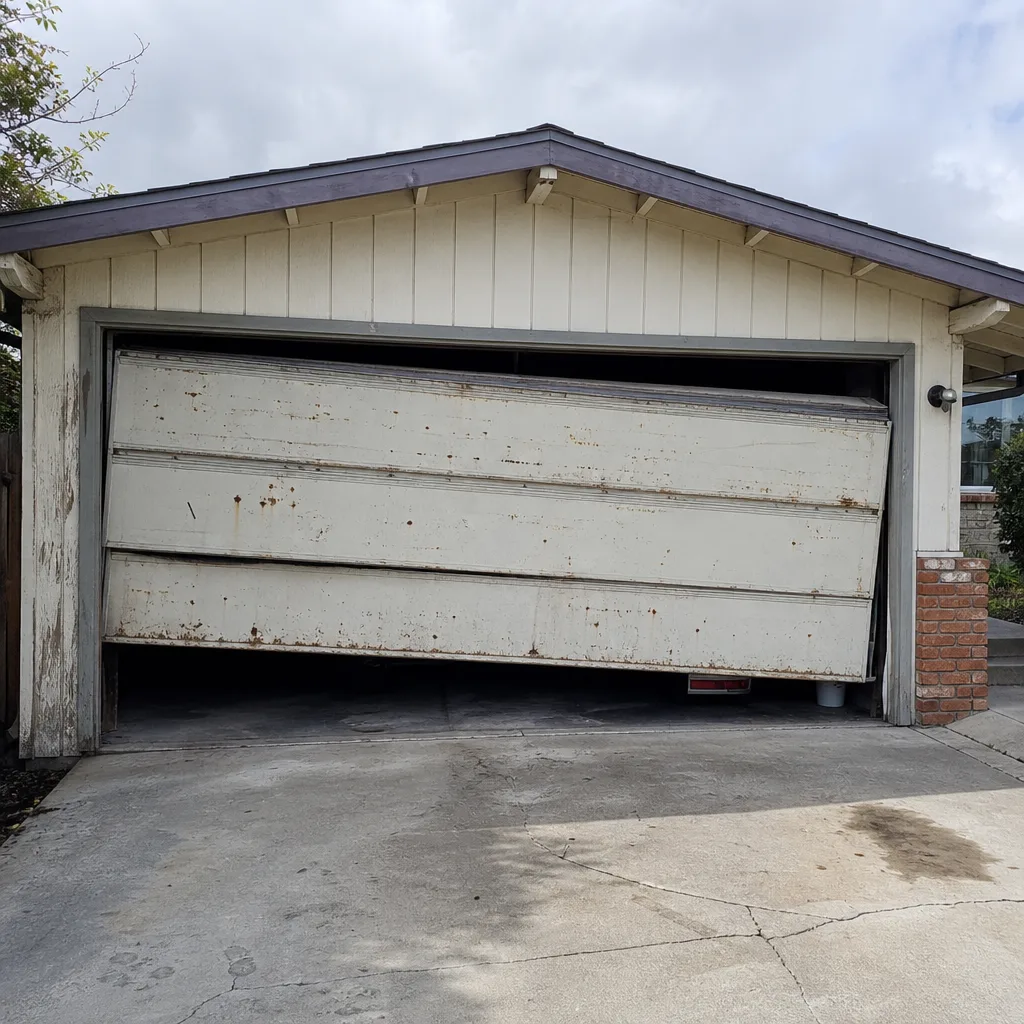 Before
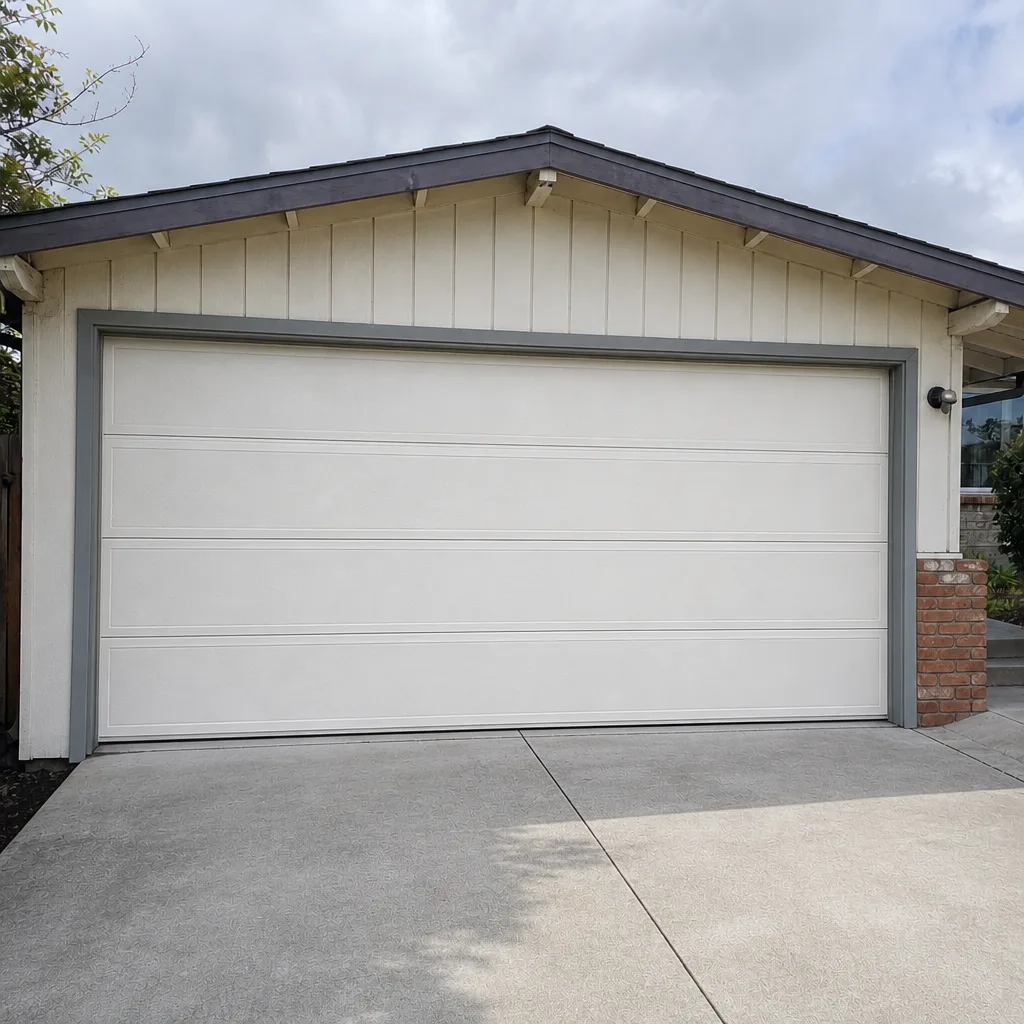 After
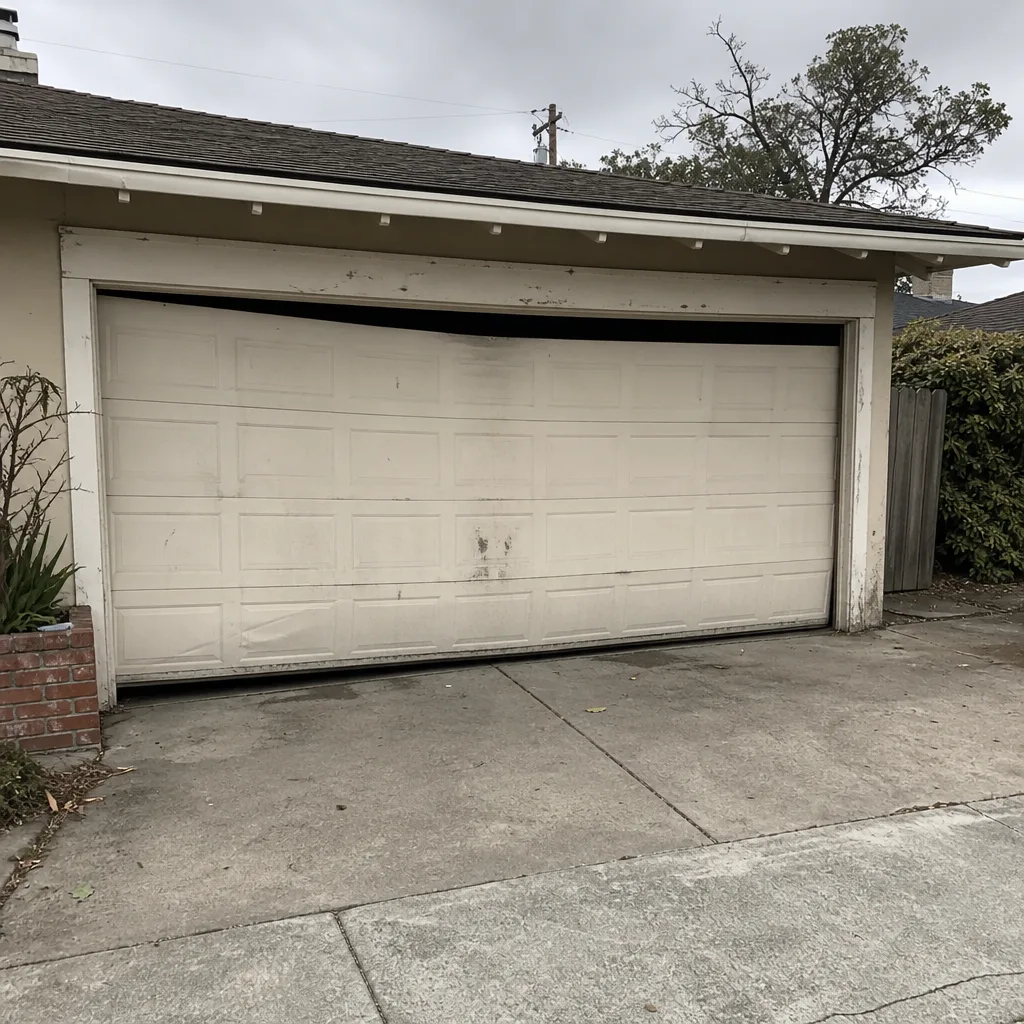 Before
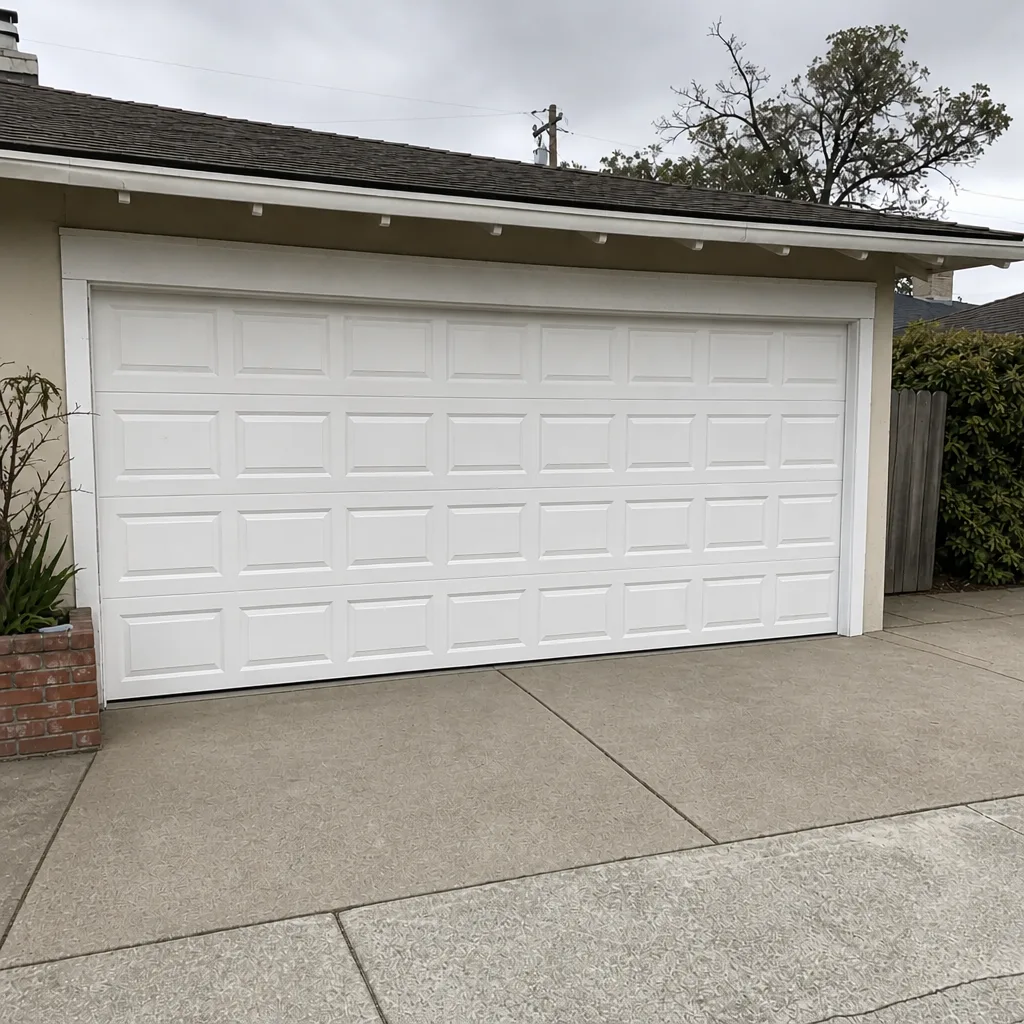 After
Common Mistakes to Avoid
- Trying to lift a door with high-tension springs or a broken spring. A door with a broken spring is heavy, and the spring cables are under load. Leave it down and call. Don’t try to force the door open by hand.
- Pressing the remote after an earthquake before inspecting. The opener won’t fix a bent track or a popped roller. It will make the damage worse. Inspect first, run the opener only after a full check.
- Assuming battery backup means you’ll never need the manual release. Backup runs a limited number of cycles, and legacy Craftsman openers often have none. Find your manual release cord now, not during an outage.
- Yanking the manual release cord hard when it doesn’t move. A stiff release usually means a jammed trolley or misaligned carriage. Forcing it can snap the cord or damage the trolley. Call if it won’t release with a normal pull.
- Running the opener after visible storm damage to “see if it still works.” A bent track or panel under motor power will rip rollers and hinges. Stop using the door and inspect.
- Adjusting torsion springs or opener wiring yourself. These are the two highest-risk parts of any garage door system in San Mateo. Both need a trained professional. Every time.
- Not knowing which opener brand you have. LiftMaster, Chamberlain, Genie, and Craftsman all release and reset differently, and knowing your brand means knowing your release procedure before the emergency.
When to Call a Professional
Some garage door failures are DIYable. Most aren’t. Call a professional if:
- You hear a loud snap and the door won’t lift by hand (a broken spring).
- The door is visibly off its track, crooked, or stuck open after an earthquake or storm.
- The manual release won’t engage, or the trolley stays disengaged after you try to reset it.
- The opener’s safety sensors won’t reset, or the door reverses partway through a cycle.
- Your opener is a legacy Craftsman and the motor hums but doesn’t move the door.
- A torsion spring, cable, or bracket shows any sign of damage at all.
Quarry Garage Door Repair offers free estimates in San Mateo. We work on the brands you already have, from LiftMaster to Clopay, and we’re a garage-door-only company, not a generalist adding it to a list. Call (877) 373-8927. We answer 24/7. Fast dispatch from 7am to 7pm, Sunday through Friday.
Frequently Asked Questions
Pull the manual release cord from the trolley (a red-handled rope), then lift the door slowly by the bottom edge. The release is nearly identical on LiftMaster, Chamberlain, Genie, and Craftsman openers. If the door won’t release with a normal pull, call a technician rather than forcing it.
A basic kit (manual release pull, LED flashlight, adjustable pliers and screwdriver) costs under $30 total and mounts on the garage wall. It’s the single cheapest preparation that pays for itself the first time you need it.
Inspect the tracks, rollers, hinges, and panels before pressing the remote. Test the door’s balance by lifting it halfway by hand and letting go. Check the opener rail and safety sensors for alignment. Only run the door after every check passes.
No. Battery backup runs a limited number of cycles per charge, typically enough for a day or two of normal use. It doesn’t power the door indefinitely, and legacy Craftsman openers often have no backup at all.
Yes. A bent track or dented panel under motor power will rip rollers, bend hinges, and turn a minor repair into a full door replacement. Stop using the opener, inspect the damage, and call a technician.
Most cities require permits for structural changes or full door replacement, not always for routine repairs. Ask San Mateo’s Building Department directly for your specific job before work starts. A San Mateo garage door specialist can help you understand what’s typically required.
The Bottom Line
San Mateo’s garage door emergencies are predictable: earthquakes shake doors off track, winter storms drop debris on panels and tracks, and power outages strand homeowners who never learned the manual release. The action plan is simple. Find your specific opener’s manual release this week (LiftMaster, Chamberlain, Genie, and Craftsman all release a little differently). Learn the seven-step post-earthquake inspection before you press the remote. Understand what battery backup actually covers. Secure a damaged door instead of running the opener on it. And build a $30 emergency kit you can reach in the dark. The door will fail. The homeowner’s preparation is what decides whether that failure costs a repair call or a full replacement.
If your door is stuck, off its track, or showing any sign of spring or track damage, don’t wait for it to get worse. Our technicians have up to 11 years of experience diagnosing doors correctly the first time, and we work on the brand you already have. Call (877) 373-8927 for a free estimate. We answer 24/7. Fast dispatch from 7am to 7pm, Sunday through Friday.
Written by the team at Quarry Garage Door Repair.